The Ancient and Modern History of Body Piercing
Body piercing is one of the oldest documented forms of human body modification — predating writing, metallurgy, and most organised religion. The urge to mark and adorn the body through piercing appears in virtually every human culture that has left archaeological evidence, and the meanings attached to it have been as varied as the cultures themselves: spiritual protection, social status, rites of passage, beauty, belonging. Understanding where piercing comes from changes how you see it today — not as a fashion trend with a 30-year history, but as one of the most enduring human practices on record.
The Ancient World: 5,000 Years of Piercing
The oldest known earrings date to approximately 2500 BCE, found in the Royal Cemetery of Ur in what is now Iraq. But evidence of ear modification goes back further still — the Ötzi the Iceman, discovered preserved in Alpine ice and dated to around 3300 BCE, had stretched ear lobes, suggesting that body modification of this kind was already established practice in Neolithic Europe.
In ancient Egypt, ear piercing was common across social classes, though the size and material of the jewellery reflected status — wealthy Egyptians wore gold and semi-precious stones, while working people wore simpler materials. Earlobe stretching (the practice of gradually expanding the piercing with progressively larger jewellery) was specifically documented among the nobility. The famous golden death mask of Tutankhamun shows clearly stretched earlobes, confirming the practice among pharaohs.
In ancient Rome, nipple piercing was documented among Roman soldiers — Julius Caesar is referenced in historical sources as having worn nipple rings, reportedly as a sign of strength and shared identity with his troops. Nose piercing has a documented history stretching back at least 4,000 years in South Asia, where it was described in Vedic texts, and nose rings remain deeply embedded in South Asian cultural and spiritual practice to this day.
Spiritual and Ritual Significance
Across cultures, the significance of body piercing was rarely purely aesthetic. Piercing the body was understood as creating an opening — literally and spiritually — and the placement of that opening carried specific meaning. In many Mesoamerican traditions, including Aztec and Maya cultures, tongue and lip piercing were associated with ritual bloodletting performed by priests and rulers as acts of communication with the divine. The pain was not incidental — it was the point.
In Hindu tradition, nose piercing (specifically the left nostril) is tied to Ayurvedic medicine and believed to ease the pain of childbirth — the piercing corresponds to a nerve connected to the female reproductive system in traditional Indian medical texts. Ear piercing in Hindu practice is a formal ceremony, Karnavedha, performed in the first years of life as one of the sixteen sacred rites of passage. In many West African traditions, ear stretching carried markers of social transition and community identity.
The Victorian Era and the Western Hiatus
The rise of Christianity in Europe brought a cultural shift away from body modification. The theological position that the body was created in God's image — and therefore should not be permanently altered — gradually suppressed the piercing practices that had existed in pre-Christian European cultures. By the medieval period, ear piercing had largely disappeared from mainstream European culture, persisting mainly in marginalised communities and in the military and maritime traditions.
The Victorian era is notable for a documented but largely hidden revival. Late Victorian society had a surprisingly active underground culture of body piercing among the upper classes — contemporary accounts from the 1890s describe nipple rings ("bosom rings") and genital piercings being fashionable among certain aristocratic circles, marketed through discreet catalogues. These practices were private by social necessity, but they document the persistent appeal of piercing even in socially repressive eras.
The 1970s Counterculture Revolution
The modern Western piercing revival traces directly to two overlapping 1970s scenes: the LGBTQ+ leather community in San Francisco and the punk movement in London and New York. Both used piercing deliberately — as a visible marker of non-conformity, a rejection of mainstream aesthetics, and a signal of belonging to communities outside the social mainstream. Safety pins through cheeks and ears, multiple lobe piercings, and visible body piercings became political and cultural statements.
Jim Ward, often called the godfather of modern piercing in the West, opened Gauntlet — the world's first professional piercing studio — in Los Angeles in 1975. Ward developed many of the sterile techniques and jewellery standards that form the foundation of professional piercing today. His work, alongside the Fakir Musafar-influenced body modification movement, established body piercing as a legitimate craft rather than a purely underground practice.
The 1990s Mainstream Moment
If the 1970s planted the seed, the 1990s saw it bloom. The early 1990s saw piercing break decisively into mainstream culture — navel rings appeared on pop stars and fashion runways; multiple ear piercings became standard in high street fashion; tongue piercings moved from subculture signifier to teenager's bedroom secret. By the mid-1990s, piercing studios had appeared on high streets across the UK and US.
The challenge was that the rapid commercialisation of piercing happened faster than hygiene standards could follow. The era produced a generation of infections, poorly placed piercings, and rejection cases — largely because many practitioners operating in shopping centre kiosks with piercing guns had no professional training. The contrast between gun-pierced ears and professional needle piercings done by trained practitioners became the defining quality divide in the industry.
Where We Are Now: The Fine Jewellery Renaissance
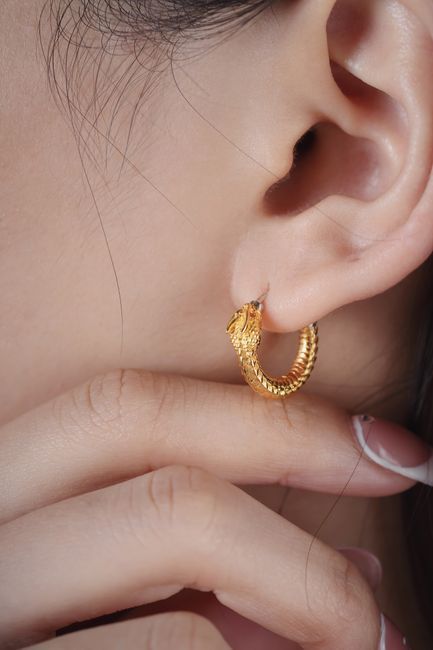
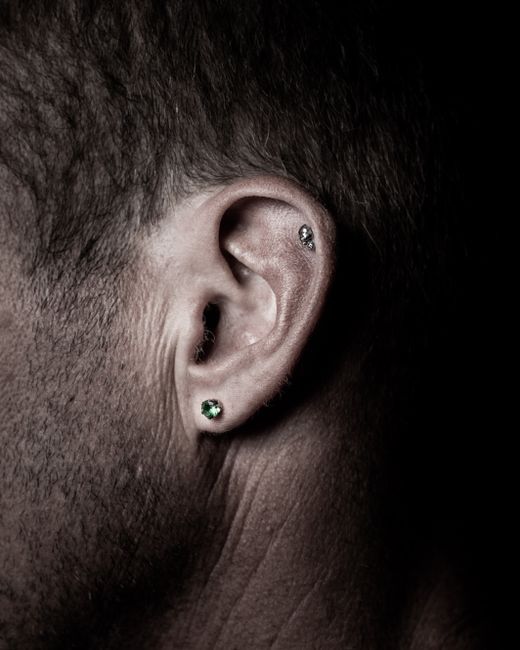
Contemporary piercing culture has undergone a significant aesthetic shift over the past decade. The dominant trend of the 1990s — surgical steel barbells and rings worn visibly as counter-culture signals — has given way to something more refined: curated ear arrangements featuring delicate gold pieces with diamonds and gemstones, designed to be layered together as intentional compositions.
"Ear curation" — the practice of planning multiple piercings as a cohesive design, often in consultation with a piercer over several visits — has become one of the most popular services in professional studios. The rise of solid gold and implant-grade titanium jewellery brands has repositioned piercing as a form of fine jewellery, not just body modification. High-end piercing studios now operate in a space somewhere between jewellery boutique and clinic.
What remains constant across the 5,000-year history is the human impulse to mark the body in ways that carry personal meaning — whether that meaning is spiritual protection, community belonging, aesthetic pleasure, or simply the desire to wear beautiful things. Piercing has survived every cultural shift because it speaks to something fundamental about the relationship between identity and the body.
Frequently Asked Questions
What was the first type of piercing historically?
Ear piercing, specifically earlobe stretching, appears to be among the oldest documented forms — evidence goes back at least 5,000 years in multiple cultures simultaneously. Nose piercing has a similarly ancient history in South Asia.
Why did piercing guns become popular if needles are safer?
Guns were quicker to operate and required less training, making them attractive for commercial settings like jewellery stores and market stalls when piercing went mainstream in the 1980s and 90s. The quality and safety difference between gun and needle piercing is significant — needles create a cleaner puncture that heals better, while guns work by forcing a blunt stud through tissue, which causes more trauma.
Is ear curation a new trend or has it been done before?
The language is new but the concept isn't. Wearing multiple earrings in intentional combinations has precedent in many historical and cultural traditions. What's new is the Western fine jewellery positioning — treating the ear as a space for thoughtfully curated gold and gemstone pieces designed as a composition rather than individual accessories.
What does the Association of Professional Piercers recommend?
The APP sets the gold standard for professional piercing — single-use sterile needles, implant-grade jewellery (solid gold, implant-grade titanium, or surgical steel), saline-only aftercare, and studios meeting clinical hygiene standards. At Teddington Ink, our piercing practice follows APP guidelines.
Interested in getting pierced by Alejandro at Teddington Ink? Find out more about our piercing services — from single lobe piercings to full ear curation consultations. And if you've just been pierced, read our complete piercing healing timeline to know exactly what to expect.