Geometric Tattoos: Precision, Pattern, and Sacred Geometry
There is something deeply satisfying about a perfectly executed geometric tattoo. Every line intentional, every angle precise, every element in conversation with its neighbour. Whether you're drawn to the meditative quality of a mandala, the architectural logic of interlocking polygons, or the ancient resonance of sacred geometry, geometric tattooing offers a visual language that is both timeless and undeniably modern.
What Is Geometric Tattooing?
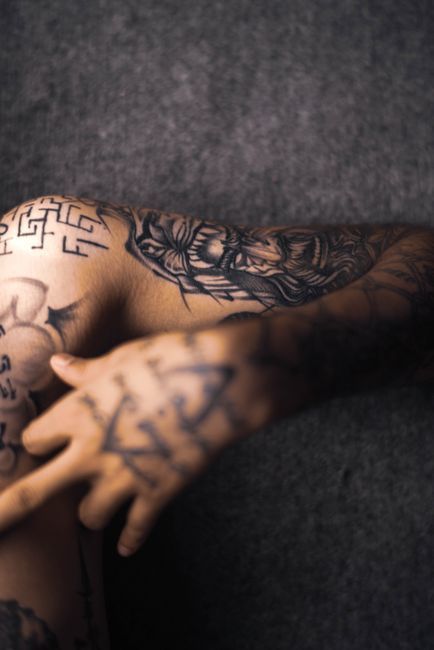
Geometric tattooing is a broad style that uses mathematical shapes — triangles, circles, hexagons, lines, dots, and their combinations — to build compositions with a strong sense of order and precision. At its most minimal, it might be a single equilateral triangle behind the ear. At its most ambitious, it can cover an entire sleeve with interlocking tessellations, mandalas, and sacred geometry symbols that draw on traditions stretching back thousands of years.
The style is largely black ink, though some geometric artists incorporate fine colour accents, watercolour washes, or negative space techniques to add depth. What defines the style is the emphasis on structure, symmetry, and technical accuracy. Unlike expressive styles where a degree of variation adds character, geometric work demands consistency — a line that's 0.5mm off can disrupt the entire visual harmony of a piece.
This makes geometric tattooing among the most technically demanding styles for an artist to execute well, and it's one of the reasons finding the right tattooist matters enormously.
Sacred Geometry: A Brief Background
Many clients come to geometric tattooing through sacred geometry — a tradition that attributes spiritual and philosophical significance to specific shapes and their relationships. The Flower of Life, Metatron's Cube, the Vesica Piscis, and the Sri Yantra are among the most widely tattooed sacred geometry symbols, each carrying meaning that spans multiple cultural and religious traditions.
The idea that the universe is built on mathematical patterns appears in ancient Egyptian architecture, in the proportions of Gothic cathedrals, in Pythagorean philosophy, and in Hindu and Buddhist mandala traditions. When people choose sacred geometry as tattoo subjects, they're often connecting to this broader idea — that beneath the apparent chaos of the world lies an underlying order, expressible through pure form.
You don't need to subscribe to any particular philosophy to appreciate or wear a sacred geometry tattoo. Many people choose these symbols for their visual impact alone, while others find them deeply personally meaningful. Both are completely valid.
Dotwork and Geometric Shading
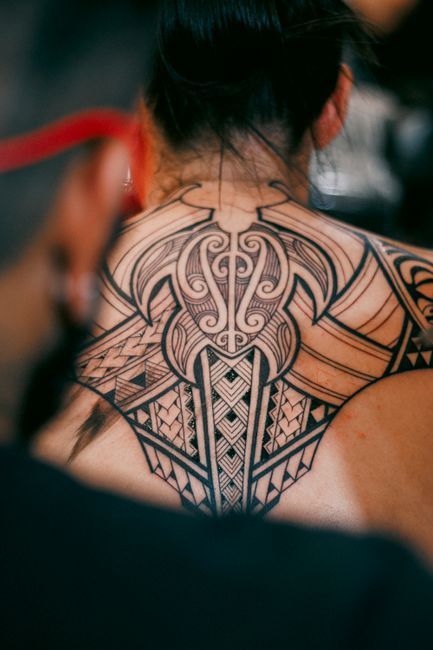
Many geometric tattoos incorporate dotwork — a technique where shading, gradients, and texture are built entirely from individual dots rather than solid fills or continuous lines. The result is a distinctive halftone-like quality, where dense clusters of dots create darker tones and sparse dots produce lighter areas.
Dotwork is painstaking and time-consuming but produces a uniquely organic quality within what is otherwise a very structured style. Mandala tattoos frequently combine crisp geometric outlines with dotwork centres, creating a satisfying contrast between precision and texture. The technique has roots in pointillism and stippling traditions in printmaking and illustration, giving geometric tattoos a fine-art pedigree.
Other geometric pieces use solid black fills in alternating sections to create optical illusions — planes that appear to shift in three dimensions, shapes that seem to fold or unfold across the skin. This 3D geometric style is particularly striking on areas with natural curves, where the skin itself becomes part of the composition.
Combining Geometry With Other Styles
One of the most compelling developments in contemporary tattooing is the combination of geometric frameworks with representational imagery. A wolf portrait breaking apart into geometric fragments at its edges, a mandala that frames a realistic eye at its centre, botanical elements dissolving into angular line structures — these hybrid approaches are increasingly popular and allow for highly personal, unique designs.
This blending works particularly well because geometry provides visual structure while the representational element provides narrative or personal meaning. The two systems contrast beautifully — the mathematical and the organic existing within the same frame. If you're interested in the symbolism behind combined imagery, our post on the symbolism behind popular tattoos covers how meaning is built into common tattoo subjects.
Placement and the Body as Canvas
Geometric tattoos work on virtually any part of the body, but certain placements are particularly well-suited to the style. The sternum and chest work beautifully for symmetrical mandalas that follow the body's natural centre line. The back of the hand, the forearm, and the calf offer flat canvas that allows clean linework to read clearly. Larger geometric sleeves can flow around the arm's natural contours in a way that feels almost architectural.
For smaller geometric pieces, the wrist, ankle, and behind the ear are popular — simple shapes or minimal line work in these locations can be deeply elegant without requiring a large footprint. A single triangle or a small mandala segment is often more powerful than something more elaborate.
Getting It Right: What to Look for in an Artist
Geometric tattooing requires a very specific skill set. Look for an artist whose portfolio demonstrates absolute line consistency — no wavering, no corners that don't quite close, no circles that aren't truly circular. These details matter disproportionately in geometric work because the style offers nowhere to hide imprecision; the eye immediately registers any deviation from the intended structure.
Ask about their process for symmetrical designs. Many geometric artists use stencils and measurement tools to ensure perfect alignment, particularly for mandala work. An artist who freehand complex symmetric pieces without any preparation should be asked to demonstrate their ability convincingly. The precision is the point — don't compromise on it.
Frequently Asked Questions
Do geometric tattoos age well?
Fine line geometric work requires more careful sun protection than bolder styles, as thin lines can spread slightly over time. Heavier linework and dotwork geometric pieces age very well. Keeping finished work out of direct sunlight and moisturised extends the life of the crisp detail considerably.
Are geometric tattoos painful?
Pain level depends on placement rather than style. Geometric tattoos on fleshy areas like the outer arm or calf are relatively comfortable. Ribs, sternum, feet, and spine are more sensitive regardless of the style being applied. The repetitive nature of dotwork can make longer sessions more tedious than intense, which many clients find manageable.
How long does a geometric tattoo take?
A simple small geometric piece might take one to two hours. Complex mandalas or sleeves can span multiple sessions of four to six hours each. The precision required means your artist won't rush, which is exactly what you want.
Can geometric tattoos be coloured?
Yes — while most geometric work is done in black ink, colour accents, watercolour washes, or full colour fills can be incorporated. Discuss this with your artist at consultation; the approach changes the tools and techniques involved.
How do I book a geometric tattoo consultation?
Bring reference images of the style you like — specific geometric works from artists whose precision you admire are particularly helpful. Book a consultation at Teddington Ink and we'll talk through placement, size, and how to build a design that suits both your vision and your body.