Japanese Tattoo Style: A Complete Guide to Irezumi
Japanese tattooing — known in Japanese as Irezumi — is one of the oldest, most sophisticated, and most technically demanding tattoo traditions in the world. It has a distinct visual language, a set of compositional rules that have evolved over centuries, and an approach to the body as a canvas that is unlike any other tattoo style. If you're drawn to the bold drama of Japanese tattooing, this guide will help you understand what defines it, what to look for in an artist, and what to expect from the process.
The History Behind the Style
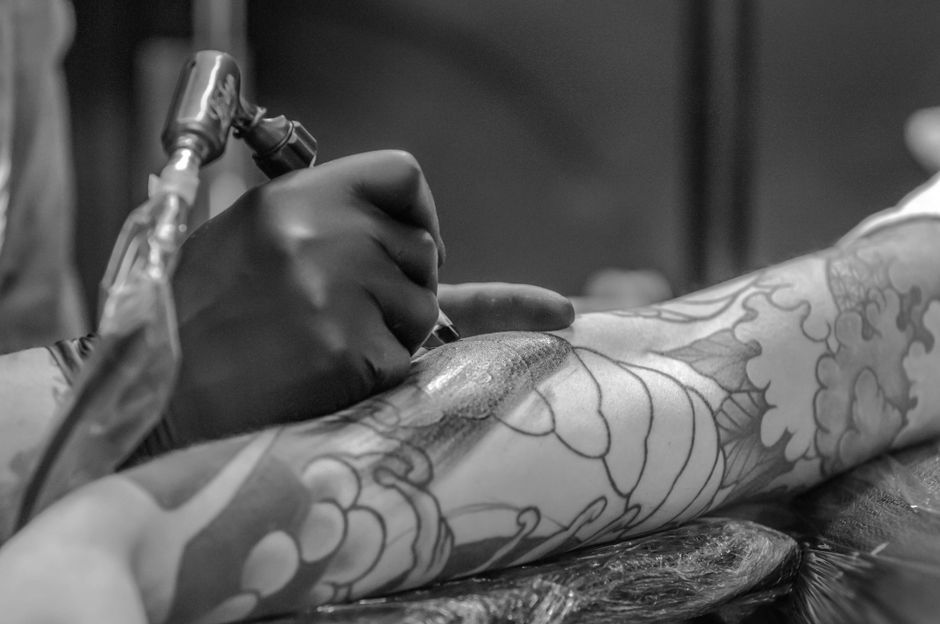
Japanese tattooing has deep roots in the Edo period (1603–1868), when woodblock print imagery began to influence tattoo design — the fluid line work, bold compositions, and iconic subject matter of ukiyo-e prints translated into skin. Tattoo artists (horishi) developed the traditional tebori technique: hand-tattooing using a wooden or metal handle fitted with needles, driven by hand rather than machine. Tebori produces a distinctive softness to the ink that differs from machine work.
During the Meiji period (1868–1912), tattooing was briefly banned in Japan as the government sought to modernise its international image — a ban that ironically pushed Japanese tattooing underground and helped it develop in distinctive ways. The ban was lifted in 1948 following WWII, and Japanese tattooing has evolved continuously since, while retaining its core visual identity.
What Defines the Japanese Style
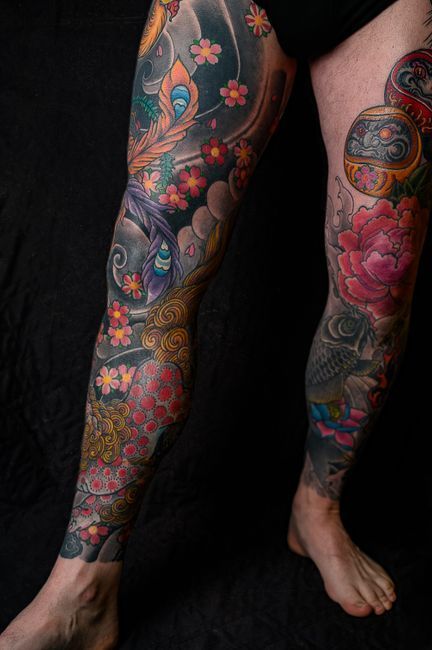
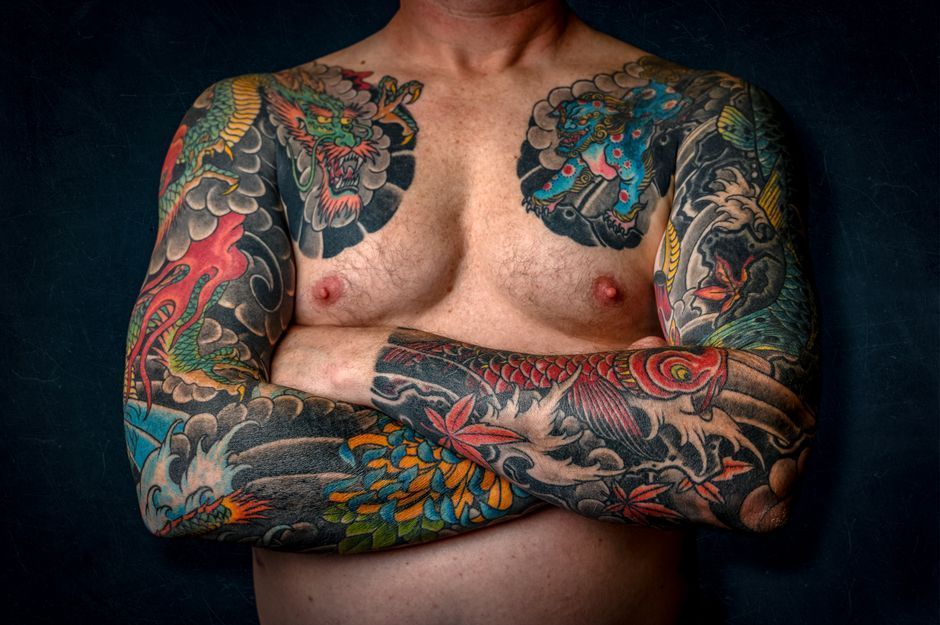
The most recognisable element is the subject matter: koi fish, dragons, tigers, chrysanthemums, peonies, cherry blossoms, phoenixes, samurai, geisha, waves, wind bars, maple leaves. Each element carries specific meaning within the tradition — koi represent perseverance and transformation; dragons wisdom and protection; tigers strength and courage; chrysanthemums longevity and royalty. The combination of subject matter in a piece isn't arbitrary — there's a visual and symbolic logic to what works together.
Equally defining is the compositional approach. Japanese tattooing treats the body as a three-dimensional canvas. Large-scale pieces flow with the natural contours of the body — designs wrap around limbs, backgrounds (typically waves, clouds, or wind) fill space in ways that create movement and coherence rather than isolated central images. This body-as-canvas thinking is fundamental to the style and is one of the things that distinguishes a genuine Japanese specialist from someone who can render the subject matter.
Traditional Colour Palette and Technique
Traditional Japanese tattooing uses a specific colour palette: deep blacks, strong reds, muted greens, ochre yellows, and classic blues and greys. Contemporary Japanese artists often expand this palette while staying within the style's overall aesthetic logic. The shading technique in Japanese work — particularly the way black ink is used to create depth and the way background elements like water and clouds are rendered — is highly distinctive and takes years to develop proficiency in.
The use of negative space (untattooed skin as a compositional element), the specific way black linework defines forms, and the relationship between foreground subjects and background fields are all part of a compositional vocabulary that identifies genuine Japanese work. These aren't things that can be quickly adopted; they reflect deep familiarity with the tradition.
How to Find a Japanese Specialist
Japanese tattooing demands a specialist. The style's compositional complexity, colour technique, and the body-flow thinking that makes it work are not generalist skills. Look for artists whose portfolio is predominantly Japanese work, ideally large-scale — smaller Japanese pieces can demonstrate subject matter but don't show the full compositional skill that distinguishes mastery of the style. Ask to see back pieces, sleeves, or other large-scale work where the body-flow logic is visible.
Assess whether the background elements (water, clouds, wind bars) are rendered with confidence and fluidity — these are often where the gap between experienced and inexperienced Japanese artists is most visible. The subject matter might look impressive, but if the surrounding background looks hesitant or formulaic, the artist doesn't yet have full command of the style.
Scale and Commitment
Japanese tattooing is most coherent at scale. Individual elements — a koi, a chrysanthemum — can work as standalone pieces, but the style achieves its full visual power in larger compositions: sleeves, back pieces, full legs, chest panels. If you're drawn to Japanese tattooing, it's worth thinking about where you might want to go with it over time, even if you're starting with something smaller. An artist who works in Japanese style at scale can design a smaller starting piece in a way that leaves room to expand coherently later.
Frequently Asked Questions
Is it culturally disrespectful to get a Japanese tattoo if I'm not Japanese?
This is a question worth taking seriously. The view within Japan is complex: tattooing has been associated with organised crime there for decades, and many Japanese people themselves avoid it. Among tattoo practitioners and enthusiasts globally, Japanese style tattooing is broadly understood as an aesthetic tradition that can be respected and engaged with across cultures, provided it's approached with genuine appreciation rather than appropriation of specific sacred or ceremonially significant elements. Research the specific imagery you're considering and consult with your artist.
What's the difference between tebori and machine Japanese tattooing?
Tebori (hand poke) produces a softer, slightly different texture of ink saturation that many connoisseurs prefer for Japanese work. Machine tattooing can produce equally high-quality Japanese work — the difference is in the texture of the ink in skin and the feel of the process, not the skill of the artist. Few Western artists work in traditional tebori; the vast majority of excellent Japanese-style tattooing done outside Japan uses machines.
How long does a Japanese sleeve take?
A full Japanese sleeve from a specialist artist — shoulder to wrist in a cohesive design — will typically require 20–40+ hours of tattooing spread across multiple sessions over months or years. Large-scale Japanese work is not a quick project. The time invested is part of the commitment the style involves.
Can Japanese elements be combined with other styles?
Some artists successfully blend Japanese aesthetics with other styles (neo-traditional particularly). The challenge is maintaining coherence — the compositional logic of Japanese tattooing is specific enough that departing from it risks creating something that looks like a failed Japanese tattoo rather than a successful hybrid. An artist who genuinely masters the style will have views on what works as a combination and what doesn't.
Interested in Japanese tattooing? Book a consultation at Teddington Ink to discuss scale, placement, and design. Our brief history of tattoos also covers the global journey that brought Japanese imagery into Western tattooing.