The Symbolism Behind Popular Tattoos
One of the most common questions in a tattoo consultation is: "Does it have to mean something?" The honest answer is no — a beautiful design is reason enough. But most people who've had a tattoo for a few years find that the ones they love most are the ones that carry some weight, even if that meaning only emerged later. Symbolism in tattooing runs deep, crossing cultures and centuries. Understanding what the most popular designs have traditionally meant — and what they tend to mean today — can help you make a decision you'll still feel proud of in twenty years.
Why Meaning Matters in Tattooing
Tattoos are among the most ancient forms of human symbolic expression. Archaeological evidence places intentional body marking as far back as the Neolithic period — not as decoration, but as language. Ancient peoples tattooed symbols of protection, status, spiritual connection, and belonging on their bodies because skin was the most intimate canvas available. That impulse hasn't changed. Even in a secular, aesthetic-led culture, people still reach for images that carry weight when they sit in a tattoo chair.
A tattoo with meaning gives you something to hold onto when someone asks "what does it mean?" It gives the piece narrative depth. And it tends to age well emotionally in a way that pure trend-following doesn't. None of this means you need a philosophy to get tattooed — but it's worth knowing the symbolic heritage of an image before it becomes permanent.
Animal Symbolism: The Most Enduring Tattoo Language
Animals are the oldest symbolic shorthand in human culture, and they remain among the most requested tattoo subjects for good reason.
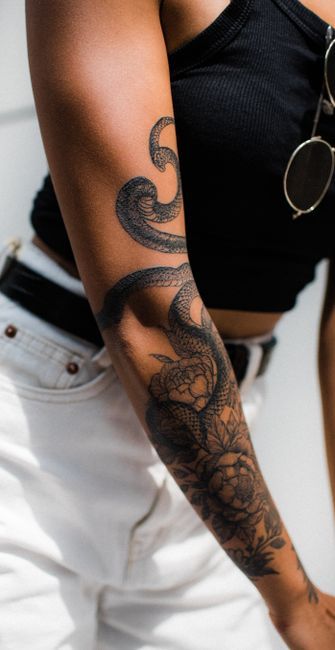
Wolves carry connotations of loyalty, family, instinct, and wildness. The wolf as a pack animal resonates with people who value their relationships above all; the lone wolf speaks to independence and self-reliance. In Norse tradition, wolves are deeply tied to both destruction and protection. Snakes are one of the most layered symbols across cultures — representing transformation (shedding skin), danger, temptation, healing (the Rod of Asclepius), and rebirth. They're a favourite for people who've come through something significant and emerged changed. Eagles carry themes of vision, freedom, and strength across virtually every culture that has known them. Butterflies , particularly in Japanese and Western traditions, embody change and the beautiful impermanence of life — they're some of the most requested pieces by people marking personal transformations. Tigers , central to Japanese and South Asian tattooing, represent courage, ferocity, and the protection of the wild.
Botanical and Floral Symbolism
Flowers were among the earliest subjects in Japanese tattooing and remain extraordinarily popular globally — because each species carries a specific symbolic inheritance that most people have an intuitive sense of, even without knowing its formal history.
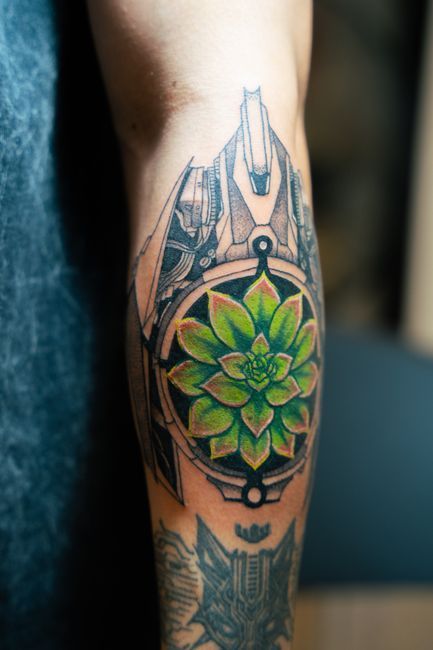
Roses represent love in almost every culture that cultivates them, but also the duality of beauty and pain — the bloom and the thorn. A rose without thorns has a different meaning to a rose with them. Lotus flowers carry particularly powerful symbolism in Buddhist and Hindu traditions: a flower that rises through muddy water to bloom in light, representing spiritual awakening, resilience, and the capacity to rise above difficult circumstances. Peonies , central to Japanese tattoo culture, carry associations of prosperity, honour, and good fortune, as well as the beauty of impermanence — they bloom briefly and fully. Cherry blossoms embody the Japanese concept of mono no aware — the bittersweet awareness that beautiful things are fleeting. They're among the most requested Japanese-influenced tattoo designs for this reason.
Cultural Traditions and Their Symbols
Some of the most visually striking tattoo traditions carry dense symbolic systems developed over centuries. Three traditions in particular have had enormous global influence on contemporary tattooing.
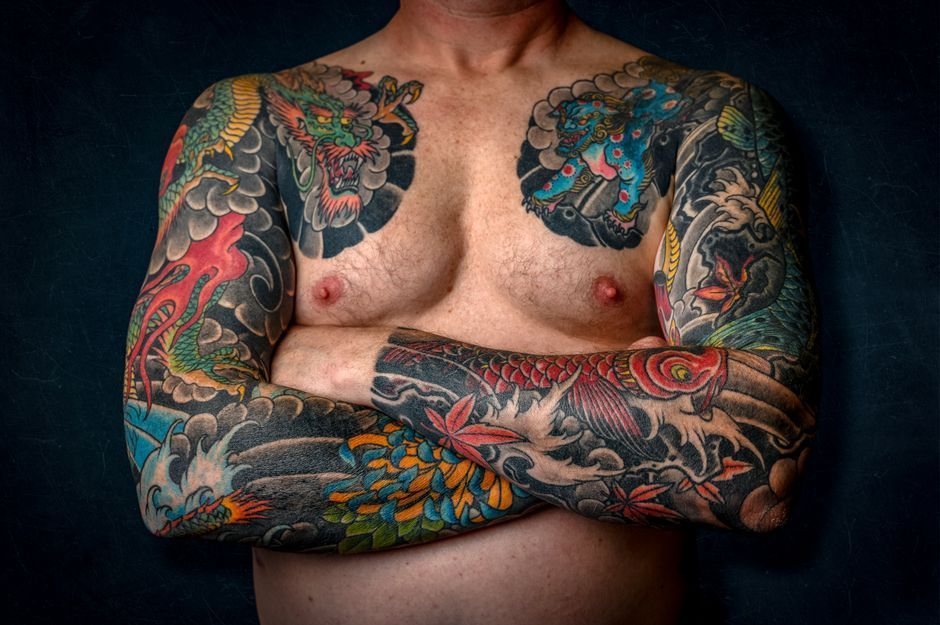
Japanese tattooing (Irezumi) is one of the most codified traditions — koi fish represent perseverance and determination (the koi swims against the current; in legend, the one that reaches the top of the waterfall becomes a dragon). The hannya mask represents a woman consumed by jealousy and rage, but in the tattoo tradition also carries protective power. Full Japanese sleeves and body suits typically tell a cohesive narrative using these symbols in combination.
Celtic knotwork developed as a visual language for concepts that resist literal representation: eternity, the interconnection of all things, the cycle of life and death. The triquetra (trinity knot) carries Christian and pre-Christian meanings depending on context. Polynesian tattooing — including Maori ta moko and Samoan pe'a — is arguably the world's richest living tattoo tradition, where every element of a design is referential: waves (the sea, travel, ancestry), turtles (navigation, protection, longevity), spearheads (warrior spirit).
Geometric and Sacred Geometry
The rise of geometric and dotwork tattooing over the past decade has brought sacred geometry — patterns and shapes found in nature and mathematics — into mainstream tattooing. The mandala, derived from Hindu and Buddhist meditative practices, represents wholeness, the universe, and the self. The Flower of Life, a geometric pattern found in temples and sacred texts across cultures, is one of the most requested geometric designs globally. For many wearers, geometric tattoos represent a connection to underlying order and structure — or simply an appreciation for precision and mathematical beauty.
Script, Text, and Dates
Words, names, and dates are among the most deeply personal tattoo choices — and also among the most technically demanding to execute well. A badly lettered tattoo is one of the most common regrets clients bring to cover-up consultations. When choosing script, work with an artist who specialises in lettering: the weight of the stroke, the spacing between letters, and the relationship between the text and the surrounding skin all matter enormously to longevity and readability. Thin, fashionable scripts have a particular tendency to blur over time as the ink migrates. A slightly bolder version of the same design will still look clean in fifteen years; an ultra-fine version may not.
When You're Drawn to a Symbol from Another Culture
This is one of the most thoughtful conversations in contemporary tattooing. Symbols from living cultural traditions — particularly Indigenous tattooing traditions like Maori, Samoan, and Hawaiian — carry specific social and spiritual meanings that can't be separated from the culture that produced them. Wearing them without connection to that culture is a genuine question worth sitting with, not dismissing. Research is always worthwhile. An artist who specialises in a style will usually have clear views on what they will and won't reproduce — listen to those views, because they come from inside the tradition.
Frequently Asked Questions
Do tattoo artists care about what a design means?
Most do, particularly for custom work. Understanding what a design means to you helps an artist make creative decisions that serve the intention — composition, style, scale. It also makes the consultation more productive. You don't need a deep backstory, but sharing what draws you to an image always helps.
Can you mix symbols from different cultural traditions?
Yes, and it's extremely common. Japanese flowers and Celtic knotwork, geometric patterns and botanical illustration — visual traditions have been cross-pollinating in tattooing for as long as it's been a global art form. The question worth asking is whether the specific symbols you're combining carry any incompatible meanings. Usually they don't, and a good artist will have views on composition and coherence.
What's the single most popular tattoo symbol?
Cross-culturally, roses and snakes both appear consistently at the top of request lists globally. In the UK specifically, fine line botanicals, butterflies, and script are perennial favourites. Trends shift, but these classics persist because the symbolism is genuinely resonant for a broad range of people.
Is it okay to get a tattoo purely for aesthetic reasons, without any meaning?
Entirely. Plenty of the world's best tattoos exist purely as art. If you love the image and the execution is excellent, that's sufficient. Many clients find that meaning attaches to a tattoo over time regardless — it becomes part of who you were at a particular point in your life, and that in itself becomes the meaning.
Do you offer consultations to help choose symbolism?
Yes. Bring references — images, ideas, words — and we'll help you develop something that works visually and feels right for you. The consultation is where the design really takes shape.
Ready to bring your idea to life? Book a consultation at Teddington Ink — and if you're still exploring styles, visit our tattoo page to see examples from our artists.