How to Pick the Right Tattoo Artist and Studio
The most important decision you'll make in the tattooing process isn't what to get — it's who you trust to put it on you. A skilled artist working in the right style for your idea is the difference between a tattoo that ages beautifully and one you start researching cover-up options for within a few years. The good news is that finding the right artist is a learnable skill, and the search itself is genuinely enjoyable if you know what to look for. This guide covers exactly how to do it.
Define Your Style Before You Start Searching
The single most useful thing you can do before researching artists is to get clear on the aesthetic you want. Tattooing encompasses many distinct visual styles, and an artist who excels in one typically produces weaker work in others. Fine line, blackwork, neo-traditional, Japanese, realism, watercolour, geometric, dotwork, illustrative — these aren't just different subject matters, they're fundamentally different technical disciplines.
Start by collecting reference images. Spend time on Instagram, Pinterest, and artist websites saving tattoos that genuinely excite you — not just ones that look interesting, but ones you'd actually want on your body. After collecting 20–30 images, look at what they have in common: line weight, use of shading, colour palette, level of detail. That visual overlap is your style. Once you know what you're drawn to, searching for the right artist becomes much more targeted.
How to Search for Artists
Instagram is the primary portfolio platform for most tattoo artists, and it's genuinely useful — but it requires some literacy to use well. Search hashtags by style (#fineline, #blackworktattoo, #neotraditionaltattoo) and location (#londontattoo, #richmondtattoo) to find local artists working in your aesthetic. Look at the accounts that appear consistently, not just individual posts. Most working artists also have a website with a fuller portfolio — always check both.
Don't rely solely on follower count. Some exceptional artists have modest followings; some accounts with large followings are built on trending work that doesn't hold up technically. Focus on the quality and consistency of the work itself.
Evaluating a Portfolio: What to Actually Look For
A portfolio is only useful if you know how to read it. The most important thing to seek out is healed work. A fresh tattoo always looks its best — lines are crisp, ink is saturated, skin is perfect. Healed work tells you what an artist's tattoos actually look like after the body has processed them. Ask artists directly if they have healed examples in your preferred style; most with strong technique will be proud to show them. If an account only shows fresh tattoos, note that.
Beyond healed work, look for consistency. A portfolio with fifty consistently strong examples tells you more than one with three standout pieces surrounded by weaker work. Also assess how the artist handles the specific thing you want: if you want a delicate floral design in fine line, look specifically for that — not their traditional bold work or their realism pieces, however impressive those may be.
Custom Work vs Flash: Understanding the Difference
Flash tattoos are pre-designed pieces an artist has drawn in advance and offers to tattoo for a set price. They're typically quicker to book, often more affordable, and give you a chance to get tattooed by an artist whose style you admire without going through the full custom design process. Many of the strongest contemporary tattoos are flash pieces — an artist designing in their own style without client-led constraints often produces their best work.
Custom work involves the artist designing something specifically for you based on your brief and references. It requires a consultation, usually more lead time, and is typically priced differently. For pieces with personal significance, unusual subject matter, or very specific reference requirements, custom is the right choice. For a first tattoo, or for working with an artist whose flash you love, booking an existing design is entirely valid and can produce outstanding results.
The Consultation: How to Have a Good One
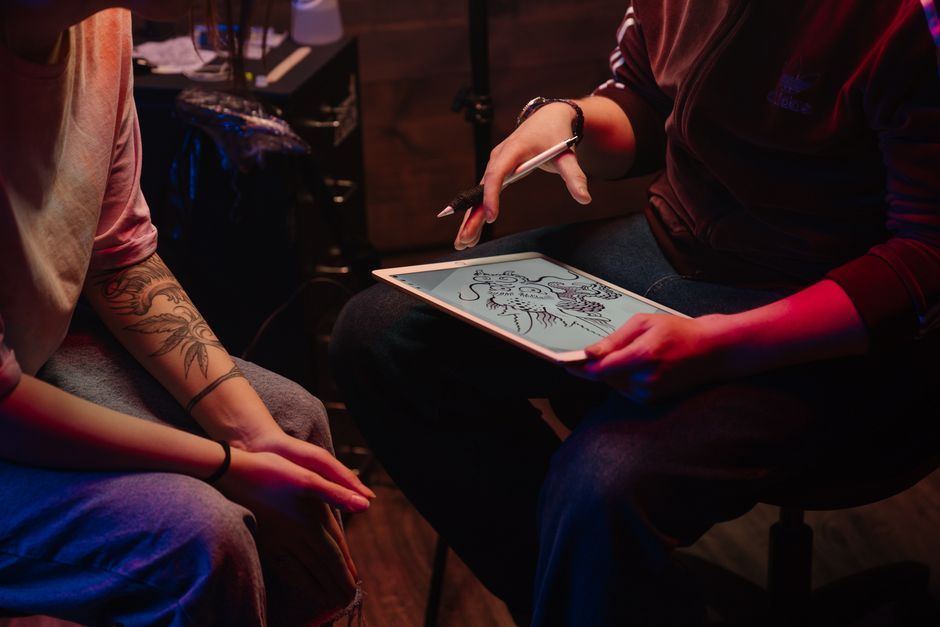
A good consultation is a creative conversation. Your job is to communicate what you want as clearly as possible — bring reference images, describe what draws you to each one, be honest about any elements you definitely don't want. The artist's job is to ask questions, translate your ideas into something that will work on skin, and give you honest feedback on what will and won't age well. Leave the design direction to them — you're hiring their creative judgment, not commissioning a copy of something else.
Listen carefully to what your artist says about scale, placement, and design choices. When an artist recommends making a design larger, thickening fine lines, or simplifying a complex reference, they're not being difficult — they're applying years of experience about how tattoos actually hold up on skin. The clients who get the best results are the ones who trust their artist's technical judgment while being clear about what matters to them aesthetically.
Red Flags to Watch For
A few signals are worth taking seriously. An artist who dismisses your references without explanation or jumps immediately to what they'd prefer to do isn't listening to you. Vagueness or defensiveness about hygiene standards is a significant warning sign. A quote that's dramatically lower than others you've received — without explanation — usually reflects a compromise somewhere in the process. An artist who pushes back against your request for healed work examples is another red flag.
Equally, pay attention to communication before the appointment. Artists who respond promptly, clearly, and professionally to enquiries almost always run their appointments with the same care. Slow, unclear, or impersonal communication from the outset is a preview of what the relationship will be like.
Questions Worth Asking Before You Book
These questions give you useful information and signal to the artist that you're a thoughtful client: Do you have healed examples of this style? How do you handle touch-ups if the ink doesn't settle perfectly? What's your process for designing custom work? Do you require a deposit, and what's your cancellation policy? Is there anything about my reference that you'd approach differently? An artist who answers these questions clearly and without irritation is someone you can work with well.
Frequently Asked Questions
How long should I expect to wait for a booking?
It varies widely by artist and studio. Strong artists with significant followings often book weeks to months ahead. For custom work, there's typically additional lead time while the design is prepared. Waiting for the right artist is almost always worth it — the tattoo is permanent, the wait is finite.
What should I bring to a consultation?
Reference images are the most important thing — the more specific the better. If you have placement ideas, a photo of the body part (relaxed, in normal daylight) is helpful. If there are elements you definitely want or definitely don't want, write them down. Coming prepared makes the consultation shorter and more productive for both sides.
Is it rude to consult multiple artists before booking?
Not at all. Most artists expect it, particularly for larger or more significant pieces. It's how informed decisions get made. The only thing to avoid is requesting detailed custom design work from multiple artists simultaneously with no intention of booking — that wastes an artist's time in a way that's genuinely unfair.
How do I know if a style will suit my skin tone?
Ask your artist directly — it's one of the most useful questions you can bring to a consultation. Some styles hold differently on different skin tones; colour saturation varies significantly; line weight choices affect longevity. A good artist will give you an honest assessment and, where relevant, adjust the design approach accordingly.
At Teddington Ink, our consultations are thorough and unhurried — we'd rather you leave completely certain than rush into something. Get in touch to start the conversation. And for more on what to look for in a studio's hygiene standards and overall setup, read our guide to finding the right tattoo studio.