Blackwork Tattoos: Bold, Graphic, Timeless
Blackwork is among the oldest and most widely practised tattoo traditions in the world — and also one of the fastest-evolving contemporary styles. At its core, blackwork uses only black ink — no colour, no greywash — but within that constraint it encompasses an enormous range of aesthetics: bold solid shapes, intricate geometric pattern, illustrative linework, dotwork shading, negative space design, and everything in between. If you're drawn to high-contrast, graphic, impactful tattoos, blackwork is almost certainly the direction to look.
What Blackwork Actually Covers
The term is broad enough that two very different tattoos can both be called blackwork. Understanding the sub-styles helps you identify what you're actually drawn to:
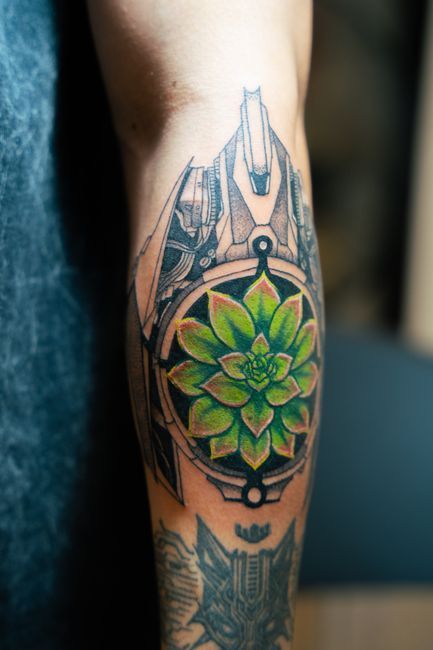
Solid blackwork: Areas of dense solid black ink — often used in large shapes, tribal-influenced designs, or heavy graphic compositions. Creates maximum visual impact; ages extremely well as the solid areas hold indefinitely. Geometric: Precise patterns using straight lines, angles, and mathematical forms — often featuring sacred geometry, mandalas, or abstract grid-based designs. Dotwork: Patterns and shading built from individual dots rather than continuous lines — can create extraordinary gradient effects and delicate texture within blackwork compositions. Illustrative linework: Drawing-style work using only black lines — botanical illustration, animals, architecture, abstract linework. Negative space: Designs where the untattooed skin creates the positive shape — technically demanding, visually striking.
Why Blackwork Ages So Well
One of the most practically significant advantages of blackwork is longevity. Black ink holds better than any colour in the skin long-term. It doesn't shift hue as it fades — it simply softens, which for well-designed blackwork means it continues to look intentional for decades. Solid black areas in particular are among the most permanent things you can put on your skin. This makes blackwork an especially good choice for clients who want work that will look strong for many years without the maintenance concerns of colour or very fine single-needle work.
Bold linework in blackwork is similarly durable — thick lines maintain their integrity longer than thin ones. Well-executed dotwork is more variable in longevity depending on the density and placement, but generally holds well in shaded areas.
Popular Blackwork Subjects and Styles
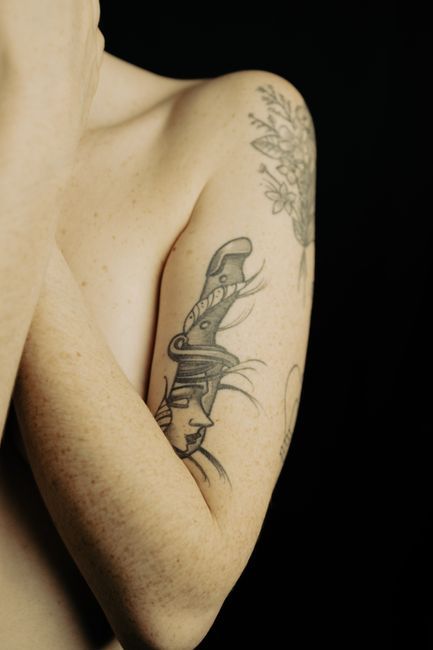
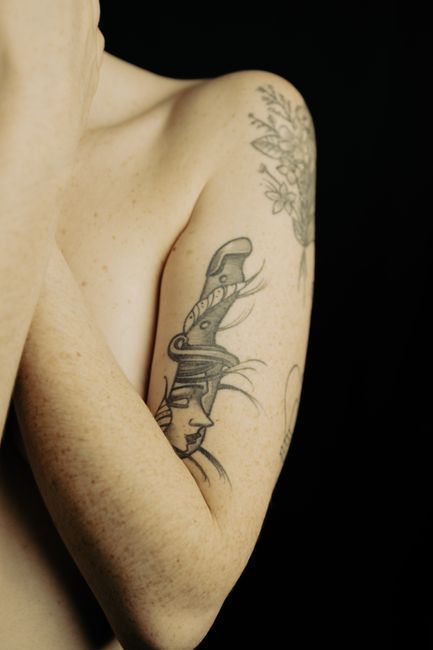
Blackwork suits a wide range of subject matter. Geometric and sacred geometry designs were among the first to popularise the blackwork aesthetic in contemporary tattooing — the precision required for perfect circles and angles suits the exactness of black linework. Botanical illustration in blackwork — particularly flowers, leaves, and plants drawn in outline or with dotwork shading — is one of the most requested contemporary styles globally. Animals in blackwork, particularly fine linework portraiture of cats, wolves, birds, and foxes, have become extremely popular. Abstract and graphic design — patterns inspired by architecture, textiles, or pure visual composition — also suits the style's bold visual language.
Blackwork and Skin Tone
Black ink is visible on all skin tones — it's one of the most universally accessible tattoo styles in this sense. On very dark skin tones where colour tattooing is challenging and fine line can be difficult to read, bold blackwork is often the recommended aesthetic. The contrast between black ink and melanin-rich skin can produce dramatic, beautiful results. Conversely, on very pale skin, the high contrast of solid blackwork is striking. Across all skin tones, blackwork consistently delivers readable, impactful results — it doesn't rely on colour saturation or light skin tone to work.
Cover-Ups and Blackwork
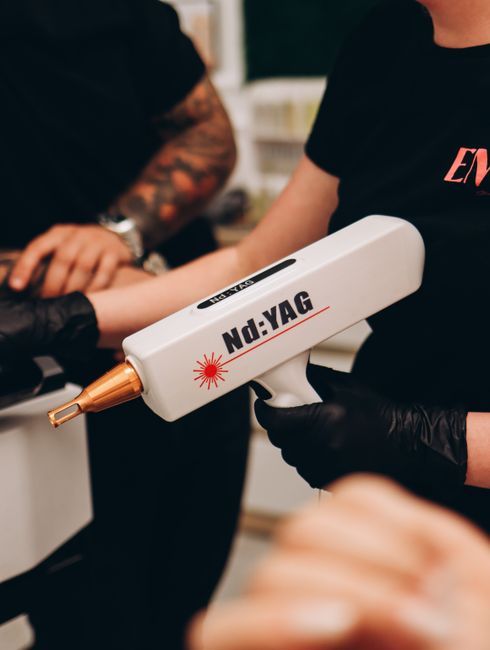
Blackwork is one of the most common approaches to covering existing unwanted tattoos. Because solid black is extremely opaque and high-contrast, it can effectively mask lighter, coloured, or faded work underneath. Successful blackwork cover-ups depend on the design being able to cover the existing tattoo's outline — if the original design is large, the cover-up needs to be larger. Laser fading before a blackwork cover-up gives significantly more design flexibility. If you're considering a cover-up, discuss the specific existing tattoo with your artist in consultation — what's achievable depends entirely on the individual case.
Frequently Asked Questions
Is blackwork the same as traditional tribal tattooing?
No, though they share visual territory. Traditional tribal tattooing — Polynesian, Maori, Samoan — is a specific cultural practice with its own history and meaning. Contemporary blackwork draws aesthetic influence from those traditions but is a distinct style. Artists who work specifically in traditional tribal tattooing are specialists in those specific cultural traditions; contemporary blackwork artists are working in a separate, though visually related, aesthetic.
Can blackwork be combined with colour?
Technically yes, though many artists working in blackwork prefer to keep work in a single medium for aesthetic coherence. Some styles — neo-traditional, for instance — combine bold black linework with rich colour. If you want colour elements within what is primarily a blackwork composition, discuss this with your artist in consultation.
Does solid black hurt more than linework?
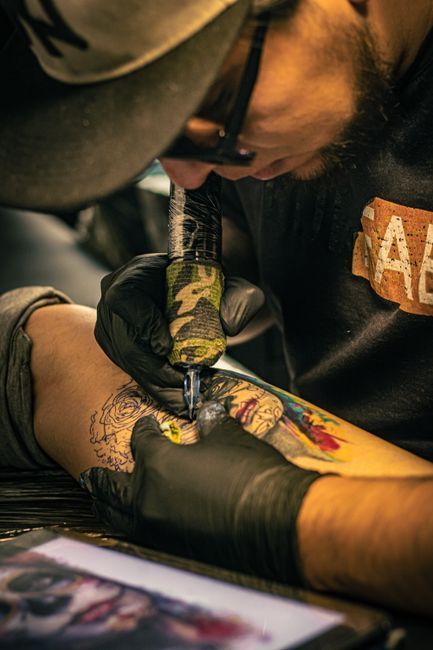
Packing solid black — filling a large area with dense black ink — involves repeated passes over the same area, which some clients find more intense than outlining. Individual pain experience varies significantly. Placement matters more than the type of work being done.
How long does a blackwork piece take?
Session length depends on size and density. A simple blackwork design of a few centimetres might take 30–60 minutes; a large geometric back piece might require multiple full-day sessions. Dense solid fill is slower to execute than linework of the same size. Your artist will give you a time estimate during consultation.
Interested in blackwork at Teddington Ink? Our artists specialise in precision blackwork across geometric, illustrative, and botanical styles. Book a consultation or read our guide on tattoo symbolism if you're still exploring what you want.