Cover-Up Tattoos: What's Possible and How to Get It Right
Cover-up tattoos are one of the most satisfying outcomes in tattooing — turning something that no longer represents you, or that was simply badly done, into a piece you're proud of. But they're also one of the most technically demanding types of tattoo work, with more constraints and considerations than a piece on blank skin. Understanding what's involved helps you approach the process with realistic expectations and make better decisions about what's achievable.
What Makes a Cover-Up Different
When tattooing on blank skin, an artist has complete freedom of design, scale, and placement. A cover-up has one fundamental constraint: the new tattoo must fully conceal the existing one. This means the new design has to be larger than, or at least as large as, the existing tattoo. It has to be positioned to overlap and extend beyond all edges of the original. And it needs to use sufficient density of ink to visually overpower what's underneath.
This doesn't mean cover-ups are limited to dark, heavy work — but it does mean the design choices are shaped by the underlying tattoo in ways that can't always be fully avoided. The best cover-up consultations involve the artist being honest about what's achievable given the specific existing work, rather than promising any design the client imagines.
What Can and Can't Be Covered
The key factors that determine what's coverable are: the size of the existing tattoo, how dark and saturated the existing ink is, and how faded it is. Very dark, dense, solid-black tattoos are the hardest to cover — they require equally heavy work to conceal and significantly limit design options. Light, faded, or older work that has spread and lost saturation is much more manageable. Coloured tattoos, particularly those in warm tones (red, orange, yellow), can bleed through certain colours and require strategic design choices to avoid visible ghost lines.
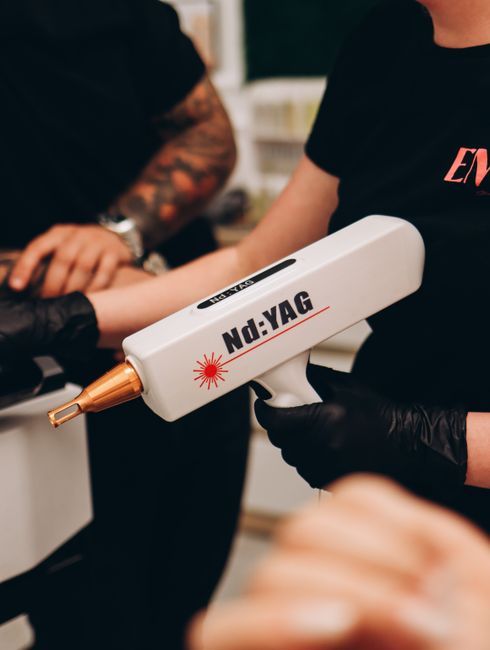
If an existing tattoo is particularly dark or large, laser fading before attempting a cover-up is often the most sensible first step. Even two or three laser sessions — not full removal — can lighten the existing ink enough to open up significantly more design options for the cover-up. This is worth discussing with your artist before committing to a cover-up approach.
Design Choices That Work for Cover-Ups
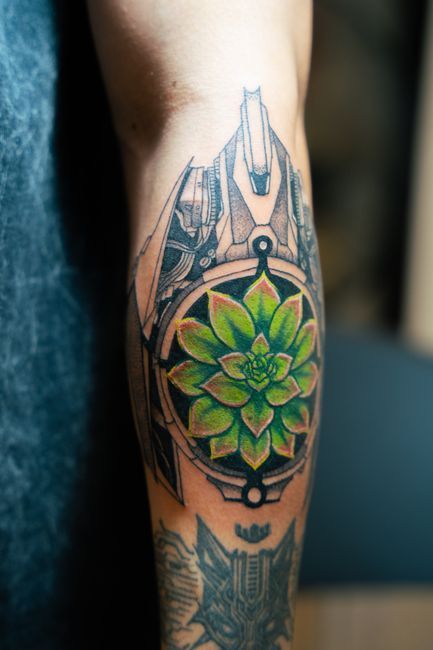
Successful cover-up designs tend to share certain characteristics. Bold, dark elements — solid black fill, heavy floral shapes, large animal subjects, dense blackwork patterns — are the most reliable for concealment. Designs with a central focal point that can be positioned directly over the most saturated part of the existing tattoo work well. Dark backgrounds, particularly in nature or floral designs, allow lighter foreground elements to read clearly while the background handles the coverage work.
Designs that don't work as well for cover-ups: very light, delicate work (fine line in particular is rarely a good primary cover-up approach), designs with a lot of white or very light colour, and small designs being placed over large existing tattoos. These aren't impossible — they just require either laser fading first, or significant creative problem-solving.
The Role of Colour in Cover-Ups
Colour can be a powerful tool in cover-ups, but it behaves differently than on blank skin. Dark blue-blacks, deep greens, purples, and reds tend to cover other colours well. Yellow, white, and very light pigments will not cover anything — they're translucent on skin in a way that solid black is not. If the existing tattoo has warm, saturated colour in it, the artist needs to plan the cover-up palette to avoid colour mixing that creates unexpected results. This is another reason why the consultation is so important for cover-up work specifically — the artist needs to analyse the existing colours and plan accordingly.
The Consultation Process
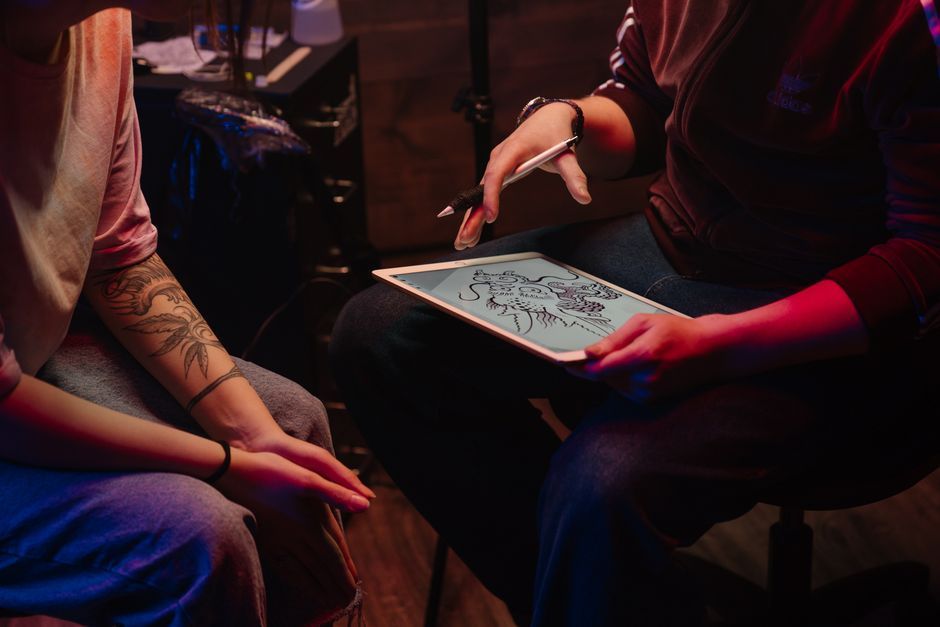
A cover-up consultation is typically more involved than a standard tattoo consultation, and rightly so. The artist needs to examine the existing tattoo in person — photographs give only a partial picture. They need to assess the depth and saturation of the ink, whether there's any significant scarring, and what the surrounding skin looks like. From there they can advise on what's achievable and begin developing a design approach.
Be realistic about this process: if an artist tells you that what you're imagining isn't achievable as a direct cover-up, take that advice seriously. It's not a limitation of their skill — it's an honest assessment of the physics of ink in skin. A good compromise (laser fading first, then the cover-up you want) is worth more than a cover-up that doesn't fully work.
Frequently Asked Questions
Can any tattoo be covered?
Almost any tattoo can be improved or concealed, but some require laser fading first to make a quality cover-up possible. Very dark, dense, solid-black tattoos are the most challenging — they can sometimes be incorporated into new designs rather than fully covered, or lightened with laser before the cover-up proceeds. The honest answer varies entirely case by case, which is why an in-person consultation is essential.
Will the old tattoo show through?
A well-executed cover-up on appropriate existing work should not be visible through the new tattoo. However, in certain lighting conditions, very dark existing ink may create a subtle ghost of the original shape. This is minimised by good design and skilled execution, and typically isn't perceptible in normal viewing conditions. The biggest risk of show-through comes from attempting to cover very dark tattoos without laser fading first.
Does a cover-up hurt more?
Not inherently, though some areas that have been previously tattooed can be more sensitive on repeat tattooing. Pain level depends on placement and individual threshold rather than on whether it's a cover-up specifically.
How much bigger does the cover-up need to be?
Typically 20–50% larger than the existing tattoo, depending on the design. The cover-up needs to extend clearly beyond the outline of the original on all sides. The exact sizing depends on what's being covered and what design is being used — your artist will advise based on the specific situation.
If you have a tattoo you'd like assessed for a cover-up, book a consultation at Teddington Ink. We'll give you an honest assessment of what's achievable and work with you to create something you'll actually love wearing.