What to Expect on Your First Tattoo Appointment
Getting your first tattoo is a genuine milestone — and like most milestones, it feels a lot better when you know what's actually going to happen. Nerves are completely normal; a little nervous energy is part of the experience. What we find at Teddington Ink is that clients who arrive knowing what to expect are more relaxed in the chair, ask better questions during the consultation, and have a more enjoyable session overall. This is everything you need to know before your first appointment.
Before You Arrive
If you've followed our tattoo preparation checklist, you'll arrive having eaten a proper meal, slept well, stayed hydrated, and avoided alcohol for at least 24 hours. These aren't just suggestions — they make a measurable difference to how comfortable you are in the chair and how cleanly your skin heals afterward.
Aim to arrive five to ten minutes before your appointment time. Studios are busy working environments and artists plan their days carefully — arriving slightly early gives you time to settle, fill in paperwork, and get comfortable before the session begins without feeling rushed. Arriving late creates pressure that follows you into the chair.
Bring your photo ID for your first visit, your chosen payment method, and any reference images for the session. Even if you've already sent your references digitally, having them on your phone means your artist can refer to them throughout the appointment as they work. Bring water and a small snack for anything over 90 minutes.
The Consultation and Design Discussion
Every appointment at Teddington Ink begins with a conversation, not a needle. Your artist will sit with you to go through the design in detail — size, exact placement, style, line weight, and any specific references you've brought. This is the collaborative phase and where most of the real decision-making happens. Don't feel rushed at any point during it.
If you've come in with a rough idea rather than a finalised design, that's absolutely fine. Our artists are experienced at translating loose concepts — a mood, a reference image, a single word — into a tattoo that works for your body and your aesthetic. The more honest and specific you can be about what you like and don't like, the better. Bring multiple references if you have them. Specificity helps.
Ask any questions you have here. What does this style look like when it ages? How does this design scale at that size? Is this placement going to be comfortable? What's the approximate session time? There are no questions too basic or too detailed at this stage — getting clarity now means confidence when the needle starts.
The Stencil
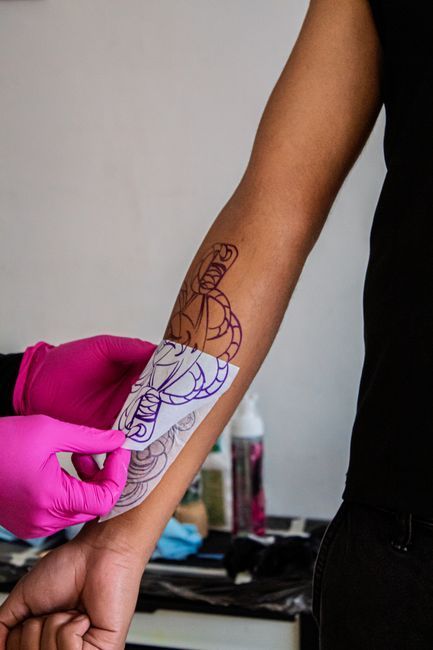
Once the design is agreed, a stencil is printed or hand-drawn and applied to your skin so you can see exactly how the tattoo will sit before anything permanent begins. This is one of the most important moments in the appointment, and it deserves your full attention.
Look at the stencil carefully. Check the placement from multiple angles using a mirror. Consider how the design sits relative to your natural body contours — how it looks when your arm is extended versus bent, for example. If the placement feels even slightly off, or if the stencil shows you that the size is larger or smaller than you imagined, say so now. Adjustments at this stage are easy and quick. Once the tattooing begins, they are not.
Good artists will not rush you at this point. Take your time. A few extra minutes of certainty at the stencil stage is worth far more than any hesitation once you're in the chair.
The Sterile Setup
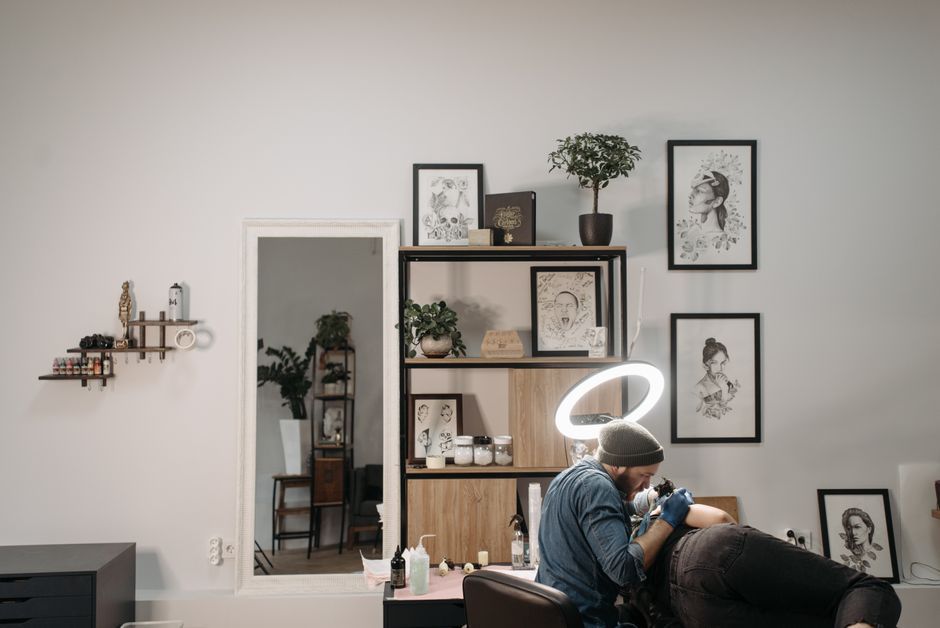
While you settle into the chair, your artist prepares the workstation. At a professional studio, everything is single-use and disposable: needle cartridges opened in front of you, fresh ink caps poured from sealed bottles, new gloves. The skin is cleaned and shaved where needed. The machine is set up and tested. None of this is rushed, and it's worth paying attention to — it tells you a great deal about the standards of the studio you're in.
This is a good moment to get comfortable. Adjust the position of the chair or table if needed, settle your belongings, put your headphones in if you're using them. If there's anything you want to raise before you start — about how the session will go, how long it will take, when you can take breaks — now is the right moment. Your artist is focused entirely on you.
Mention anything relevant about your health if you haven't already done so: skin conditions on or near the area being tattooed, medications you're taking, known reactions to latex or metals. Nothing is too minor to mention, and professionals always prefer to know in advance.
The Tattooing: What It Actually Feels Like
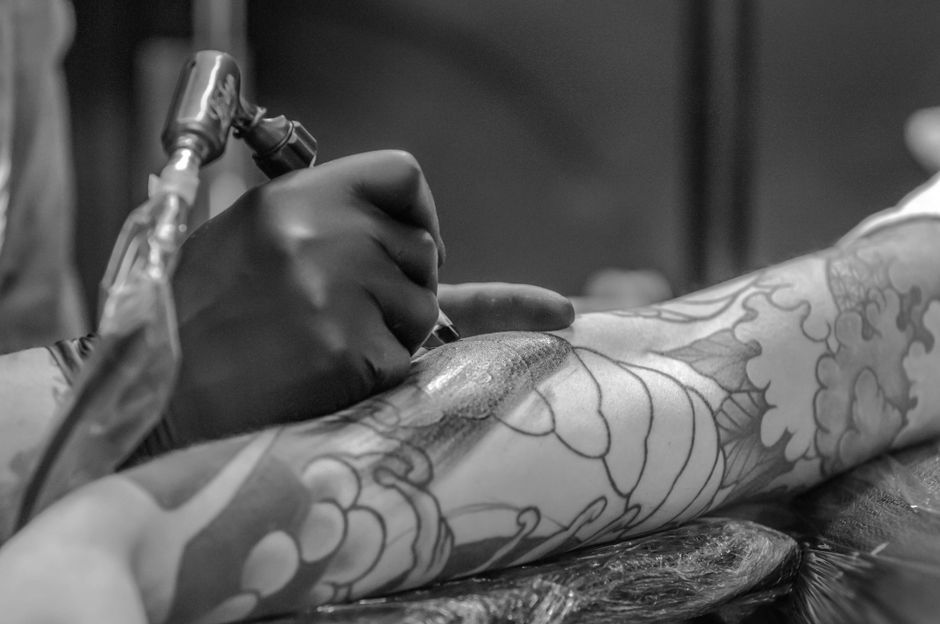
Most first-timers are genuinely surprised by how manageable the sensation is. The most common description is scratching or warming — a persistent surface sensation rather than the sharp, stabbing pain many people anticipate. Your experience will depend significantly on placement: fleshy areas like the outer upper arm, thigh, and calf are generally far more comfortable than bony areas such as the ribs, spine, shins, or feet. Your artist will give you an honest assessment for your specific placement before you begin.
The first few minutes are often the most intense as your body adjusts to the sensation. After that, most clients settle into it. Breathe steadily and deliberately — shallow, tense breathing amplifies discomfort. Stay as still as you comfortably can; consistency in the skin surface helps your artist produce cleaner, more even lines. If you need to move or adjust, warn your artist before you do rather than shifting unexpectedly.
The sensation changes throughout a session. Outlining, shading, and colouring all feel slightly different, and some areas of skin are more sensitive than others. If you want to know what's coming next, ask — many clients find it easier to manage a moment of higher intensity when they know it's temporary and know when it's ending.
Taking Breaks
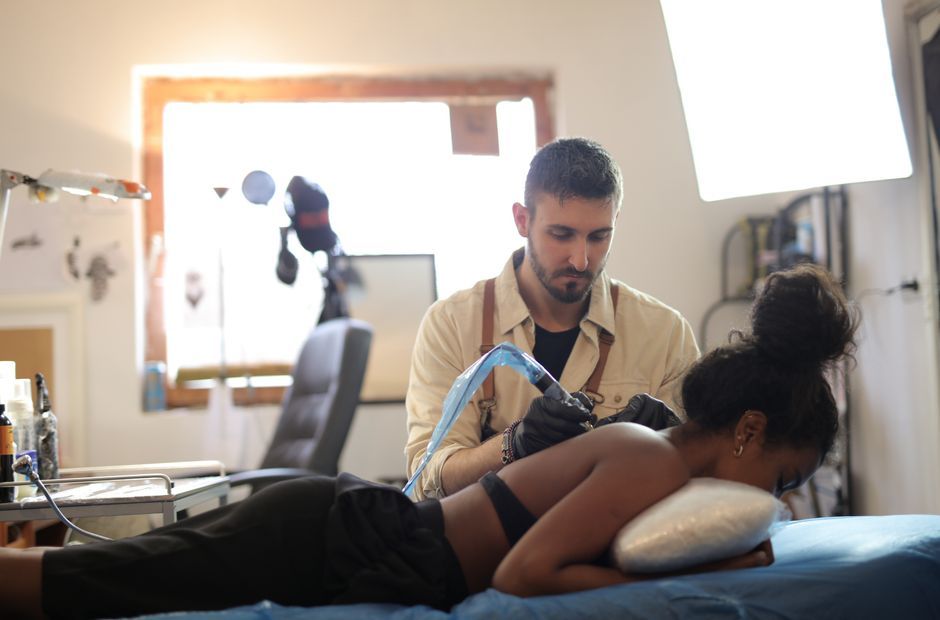
You are always allowed to ask for a break — at any point, for any reason. This is not an inconvenience. For sessions longer than 90 minutes, most artists will build in short natural pauses. If you're feeling light-headed, tense, or simply need to stand up and move around, say so immediately. Getting up, having water and a small snack, and walking for a few minutes often makes the second half of a session significantly more comfortable than the first.
If you feel faint or nauseous at any point, tell your artist straight away. It happens more often than most people realise — particularly in clients who haven't eaten beforehand or who are particularly nervous — and there is absolutely nothing to be embarrassed about. We'll stop, get you what you need, and continue only when you feel ready. Pushing through when you're not feeling well doesn't produce better results; it makes the session harder for everyone.
Finishing Up: The End of Your Session
When the tattoo is complete, your artist will clean the area thoroughly, apply a thin layer of aftercare balm, and cover it with a protective bandage or breathable tattoo healing film. Take a moment to look at your tattoo before it's covered. The combination of pride, disbelief, and exhaustion at this point is entirely normal — and completely expected.
Your artist will walk you through the aftercare process before you leave. Pay attention to this — it matters more than most first-timers expect. The choices you make in the first two weeks, including how you clean it, what you apply, whether you keep it out of the sun, directly affect how your tattoo settles and how vivid it looks once fully healed. Our complete tattoo aftercare guide covers the full healing process in detail if you want to read ahead.
Tipping your artist is not expected but is genuinely appreciated, particularly for custom work or long sessions. Cash is most direct. A Google review is equally meaningful for small independent studios like ours — if you had a great experience, taking two minutes to write one is one of the best things you can do for a business you want to keep coming back to.
Frequently Asked Questions
How long does a first tattoo appointment usually take?
It depends on the size and complexity of the design. A small, simple piece might take 30 to 60 minutes; a medium-detailed piece typically runs 2 to 3 hours. Your artist will give you a realistic time estimate during the design consultation. For longer sessions, try to keep the rest of your day free rather than scheduling commitments immediately after.
What if I'm not happy with the stencil placement?
Say so, clearly and without hesitation. The stencil can be removed and repositioned as many times as needed. This is the single most important point to raise concerns about placement or sizing — once tattooing begins, adjustments become significantly more complicated.
Will my artist copy my reference image exactly?
A good tattoo artist adapts references rather than copies them directly. Designs that work on paper don't always translate directly to skin — proportions, line weights, and how fine details hold up over time all need consideration. Your artist will talk you through any adaptations before beginning. If accurate replication is important to you, be explicit about that during the consultation.
Can I bring a friend to my appointment?
One guest is generally fine. A group is not — studios are working environments and the focus needs to be on the session. If you're planning to bring someone, mention it when you book so we can make sure the room setup works.
What should I do if I change my mind during the session?
Speak up immediately. If something doesn't feel right — the placement, the size, the direction the piece is going — raise it with your artist right away rather than hoping it resolves itself. Good communication mid-session is always better than dissatisfaction at the end of one.
Ready to book your first appointment? Find your artist and book at Teddington Ink — we're in Teddington, and we'd love to make your first tattoo experience a great one. Before you come in, make sure you've read our full preparation checklist so you arrive feeling completely ready.