Tattoo Size: How to Choose the Right Size for Your Design
One of the most common mistakes people make when planning a tattoo is arriving at their consultation with an image they love and a very fixed idea of how small — or how large — they want it. Size is one of the most consequential decisions in tattooing, and it affects far more than just how much space the design takes up on your body. It determines what detail is achievable, how the piece will hold up over time, and ultimately whether the design works at all.
Why Size Matters More Than You Might Think
Every tattoo design has a minimum viable size — a threshold below which the level of detail in the design simply cannot be reproduced in skin. Skin is not paper. Lines spread slightly as they heal, fine details blur together over years, and the pigment sits in living tissue that changes with age. A design that looks crisp and intricate at five centimetres in a digital mockup may look muddy and illegible at two centimetres on skin, even immediately after being done.
This is why your artist may push back on a request to make something "as small as possible." They're not being precious about their work — they're protecting the result. A tattoo that is too small for its design will look good for perhaps a year and then deteriorate quickly into an indistinct blob. Sizing up, while it may feel like a big commitment, is almost always the right call when a design has significant detail.
The relationship between size and longevity is one of the most important things to understand before your first consultation. Bold, simple designs survive at small sizes. Complex, detailed designs need room to breathe.
What Size Works for What Style
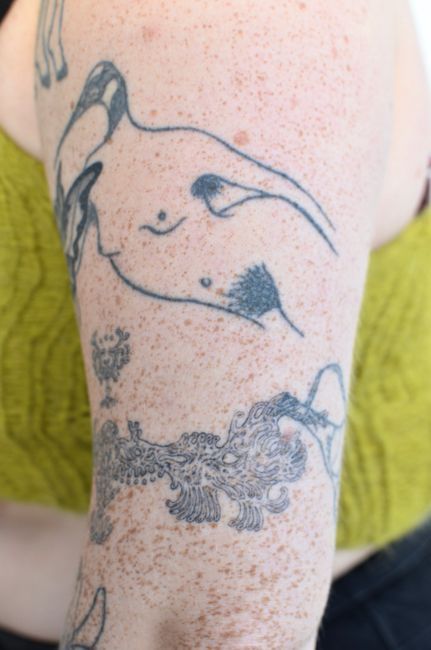
Different tattoo styles have different size requirements. Fine line work — delicate botanical illustrations, portrait linework, intricate geometric patterns — needs more space than its visual lightness might suggest. The very fineness of the lines means there's less margin for the natural spreading that occurs as skin ages. Fine line pieces sized too small will fade and blur faster than equivalent bold line work.
Traditional and neo-traditional styles are more forgiving at smaller sizes because the bold outlines hold detail in place over time. A small traditional rose on a wrist at around five centimetres is a classic that ages beautifully. The same graphic sensibility that makes old school work so enduring also makes it more scale-flexible.
Realism and portraiture are almost non-negotiable in terms of minimum size. A realistic portrait needs at minimum ten to twelve centimetres in height to accommodate the range of tones and the specific proportions of a face without losing recognisability. Attempting portrait realism at small scale is one of the fastest routes to a disappointing result.
How Placement Affects What Size Works
Placement and size are inseparable decisions. The area of the body where you want your tattoo puts natural constraints on what size is appropriate — and in some cases, what sizes are even possible. A full back piece can accommodate scales that would be physically impossible on a wrist or ankle. But placement also affects how the design is read and experienced.
Some placements have natural frames: the forearm is essentially a long rectangle, which suits long vertical designs or horizontal bands. The upper arm and shoulder work well for circular or rounded compositions that follow the natural curve of the muscle. The calf is longer and rounder, which affects how a viewer's eye moves through a piece.
Our guide to tattoo placement covers these dynamics in detail — including which areas are most and least suitable for different types of designs, and how your body's natural contours can work with or against a particular composition.
The "Make It Bigger" Conversation
Most experienced tattoo artists will at some point suggest making a requested design larger than the client originally envisioned. This conversation can feel uncomfortable, particularly for clients who came in with a very specific idea of what they wanted. But it's worth listening to, because the artist is almost always right.
What looks like a "small, subtle" tattoo in a reference photo online was usually photographed in ideal conditions on a specific body type and may have been digitally sharpened or enhanced. On your skin, in real light, at actual scale, that same piece might look half the size and twice as faded within a few years.
A good artist will show you the stencil before applying it. This is your opportunity to assess the size in the actual location on your body, in natural light, in real life. If it looks smaller than you expected when applied as a stencil, it's going to look smaller still as a healed tattoo. This is the moment to speak up and size up.
When Smaller Really Is Better
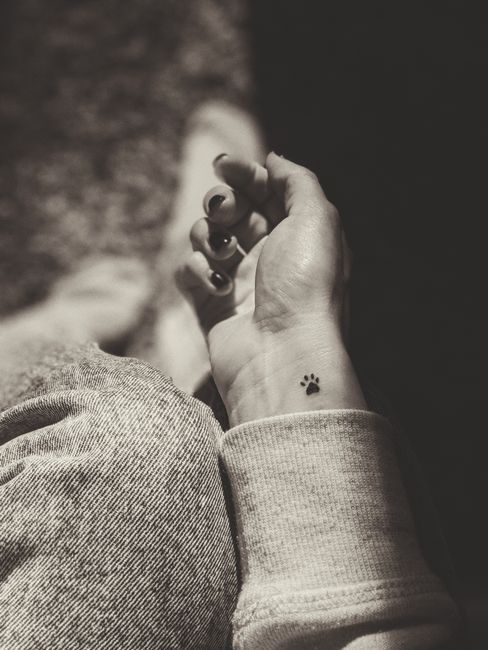
This isn't a universal argument for always going big. Genuinely simple designs — a single clean outline shape, a small word in a clean font, a straightforward geometric symbol with no fine internal detail — can be very effective at small sizes. A tiny crescent moon on a collarbone, a single line of text on a wrist, a small bold anchor behind an ear: these work because the design is appropriate to the scale.
The key is the relationship between design complexity and physical size. Simple design at small size works beautifully. Complex design at small size fails. When your artist assesses a design you've brought and suggests scaling up, they're identifying that the complexity of what you've chosen requires more real estate to be done justice.
Talking It Through at Consultation
The consultation is the right time to work through size questions properly. Bring reference images, but be explicit that you're open to the artist's input on sizing. Tell them what you want the tattoo to convey and where you're thinking of placing it, and then ask them what they think is the minimum size to do it justice — and what size they'd recommend for optimal results.
A good artist will give you honest answers to these questions rather than simply agreeing with whatever you say. If your artist seems unconcerned about minimum size requirements for a complex design, treat that as a warning sign. Book a consultation at Teddington Ink and we'll give you a frank assessment of what size makes sense for your design and placement.
Frequently Asked Questions
Can a tattoo be made smaller after it's done?
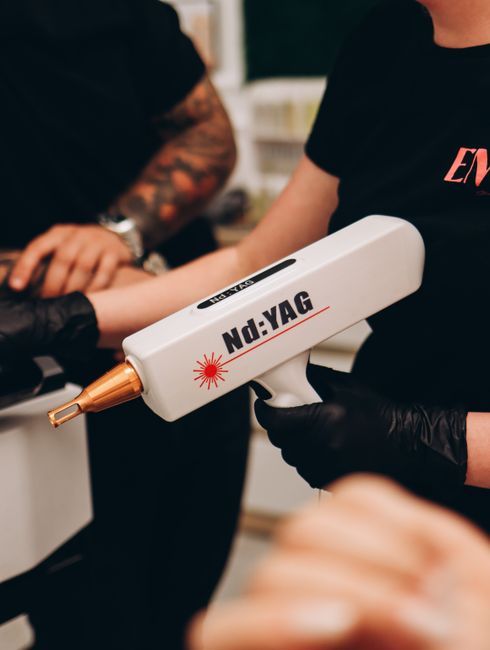
Not without laser removal. Once a tattoo is on the skin, its size is permanent. This is why getting the size right before application matters so much — stencils are your last chance to make adjustments.
Will my tattoo look bigger or smaller once healed?
Healed tattoos appear very slightly smaller than they do when freshly applied, as the initial swelling subsides. Colours also mellow slightly during healing. What you see at the two-week mark, when it's fully healed, is very close to how it will look long-term.
What's the smallest size a tattoo can be done well?
It depends entirely on the design. A simple geometric shape or bold outline can work at one to two centimetres. Detailed figurative or realistic work needs significantly more space — typically eight to fifteen centimetres minimum depending on complexity. Your artist will advise based on the specific design.
Do larger tattoos cost significantly more?
Yes — pricing generally reflects time, and larger pieces take longer. However, the relationship isn't strictly linear; a small, highly detailed piece can take longer than a larger, simpler one. Most studios quote by the session or hourly rather than by size alone.
Can I see the stencil before we start?
Always. Any reputable artist will apply the stencil and show you before they begin. This is your opportunity to check position, orientation, and size in real life. Don't hesitate to ask for adjustments at this stage — it's far easier than any alternative.