Do Tattoos Hurt? Understanding Pain Levels, Placement, and How to Manage Discomfort
Do tattoos hurt? Yes — but probably not in the way you're imagining, and almost certainly not as much as you're worried about. Pain levels vary enormously depending on where you're being tattooed, how long the session runs, your personal pain threshold, and several factors entirely within your control. This guide gives you the honest picture: what the sensation actually feels like, which placements are most and least painful, and practical ways to make your session as comfortable as possible.
What Tattooing Actually Feels Like
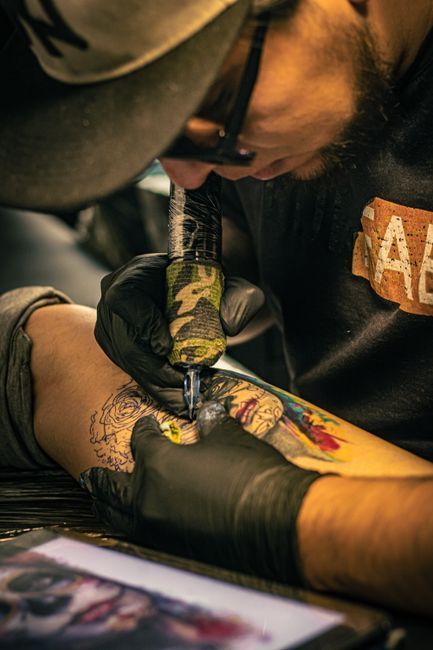
The most common first reaction from new clients is some version of "it's not as bad as I expected." The sensation is most accurately described as scratching, heat, or persistent vibration — not sharp, stabbing pain. The needle penetrates the skin at a speed and depth that produces a surface sensation rather than a deep one. It's consistent rather than sporadic, which paradoxically makes it easier to manage than many people anticipate.
What changes throughout a session is the intensity. The first few minutes can be the most acute as your body processes what's happening. After that, most clients settle into a rhythm and find the sensation becomes manageable background discomfort rather than sharp pain. Longer sessions introduce cumulative tiredness as the skin is worked repeatedly and the adrenaline from the novelty wears off — a 30-minute piece and a four-hour session are genuinely different experiences.
The most accurate framing: tattooing is uncomfortable, and that discomfort is sustained. For most people, in most placements, it is not the ordeal they feared. Most first-timers leave wondering what they were so worried about. A few placements are genuinely intense — those are addressed honestly below.
The Most Painful Tattoo Placements
Pain correlates strongly with two factors: proximity to bone and nerve density. Areas where the skin is thin over bone, or where major nerves run close to the surface, hurt significantly more than well-padded, fleshy areas. The following placements consistently rank as the most challenging:
- Ribs: Thin skin directly over bone, and every breath moves the skin. Most frequently cited by clients as the most intense placement.
- Sternum: Same principle — thin skin, bone close to the surface, movement with every breath.
- Spine and lower back: High nerve density and thin skin over the vertebrae make this significantly more intense than surrounding back areas.
- Hands and fingers: Dense nerve endings, thin skin over bone, and the additional challenge of an area that's difficult to keep still.
- Feet and ankles: Nerve-rich, bony, and awkward to position for extended sessions.
- Head and face: High nerve density throughout, and vibration transmits through the skull in scalp work.
- Inner elbow and knee ditch: Thin skin over tendons and major nerves — notably more intense than the surrounding areas.
The Least Painful Tattoo Placements
Fleshy areas with fewer concentrated nerve endings and good muscle padding beneath are consistently the most comfortable. If you're considering a first tattoo and want to start somewhere manageable, these are your best options:
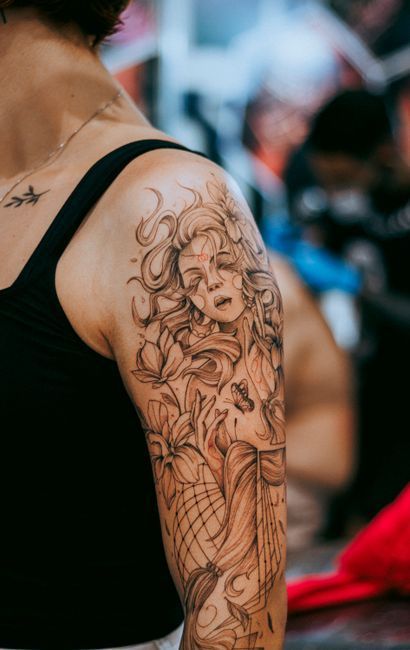
- Outer upper arm: The classic first tattoo location for good reason — well-padded with muscle, with no major nerve concentration on the outer surface.
- Thigh: Large, fleshy, and comfortable to sit through. One of the most popular large-piece placements for exactly this reason.
- Calf: Good muscle padding and low nerve density. Tends to be well-tolerated even through longer sessions.
- Shoulder and shoulder blade: Broad, relatively flat, comfortable for most clients.
- Upper back: A large manageable canvas, though the spine itself within this area is notably more intense.
- Outer forearm: Consistently well-tolerated; the inner forearm is slightly more sensitive but still in the manageable range for most people.
What Affects Your Pain Threshold
Pain isn't fixed — it's significantly influenced by the state you arrive in. Several factors are entirely within your control:
Sleep. Research consistently shows that sleep deprivation lowers pain tolerance significantly. Arriving at a tattoo appointment tired is one of the most reliable ways to make the experience harder than it needs to be. A full night's sleep the night before is one of the most effective things you can do to prepare.
Food and blood sugar. Getting tattooed on an empty stomach is the most common cause of clients feeling faint or excessively uncomfortable mid-session. Your body is under sustained physical stress and needs fuel. Eat a proper meal two to three hours before your appointment — something with protein, carbohydrates, and healthy fat. Bring a snack for anything over 90 minutes.
Anxiety. Tension and anticipatory fear tighten muscles and amplify the perception of pain. Clients who arrive knowing what the sensation feels like consistently report more comfortable sessions than those who arrive dreading something unknown. Talking to your artist — before and during the session — helps considerably.
Hydration. Dehydrated skin doesn't take needle work as well, and dehydration generally reduces pain tolerance. Drink water consistently the day before and morning of your appointment.
How Session Length Affects Discomfort
Short sessions under 90 minutes are generally well within tolerance range for most people, even in moderately sensitive placements. The challenge increases with time. After two to three hours, the adrenaline from the early part of the session has worn off, the worked skin becomes more reactive, and the cumulative nature of sustained discomfort starts to compound.
Breaks genuinely help in longer sessions. Getting up, walking around, eating something, and resetting for five to ten minutes often makes the second half of a long session notably more comfortable than the first. Good artists build these pauses in naturally — and telling your artist you need a minute is never an inconvenience. Don't try to push through if you're genuinely struggling.
Managing Discomfort: What Actually Works
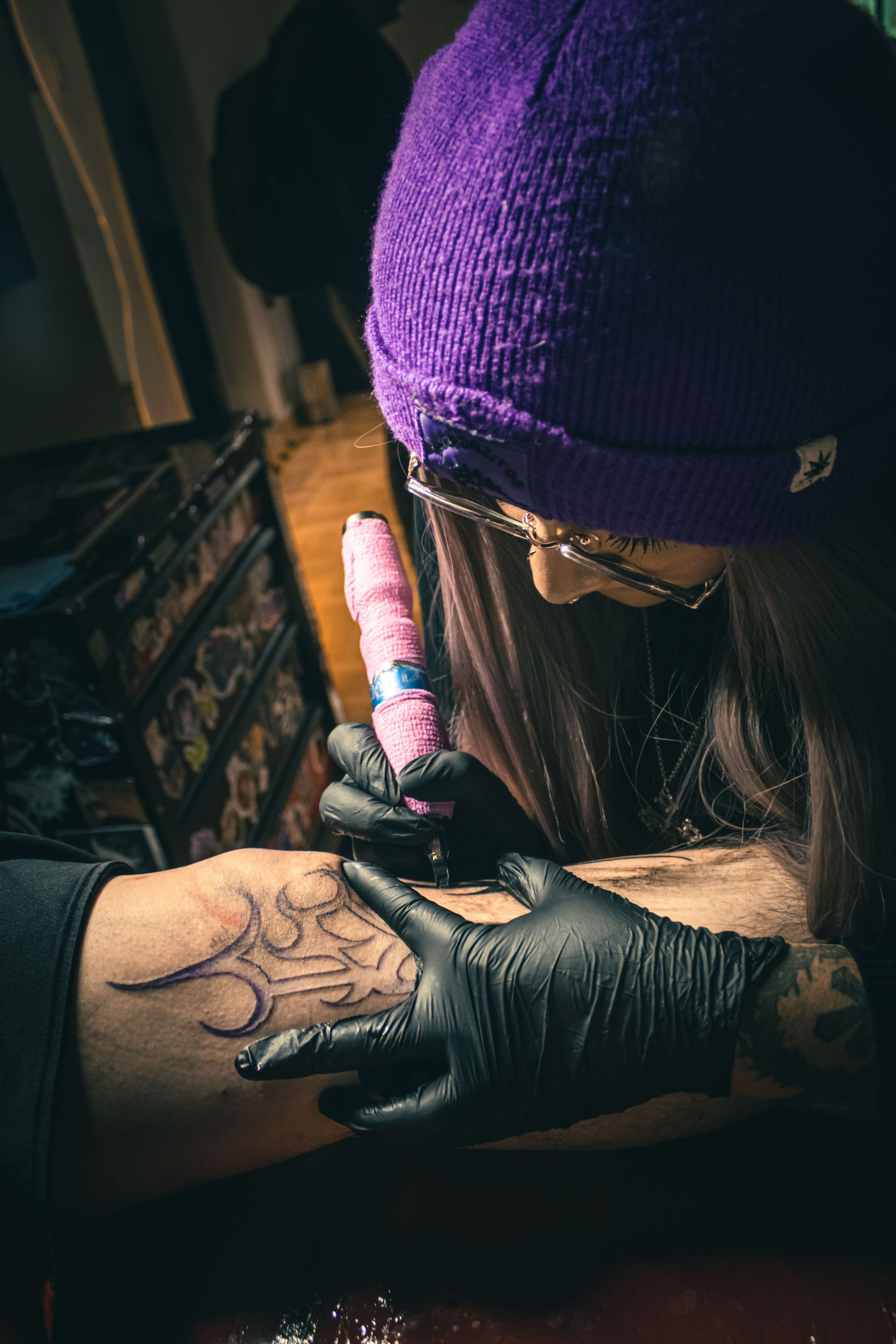
Breathe deliberately. Slow, controlled breathing reduces the perception of pain significantly. When you're tense, you breathe shallowly and your muscles contract — both of which amplify the sensation. Try breathing in for four counts and out for four throughout the session. Keep your muscles as relaxed as you can.
Use distraction. Music, a podcast, or an audiobook occupies the part of your brain that's monitoring the sensation. Many clients find that an engaging podcast during a longer session makes the time pass far faster than sitting in silence.
Talk to your artist. A good conversation divides your attention and makes the session feel more human. Your artist is there for the whole session — conversation is entirely welcome and genuinely helps.
Eat and drink during the session. For sessions over 90 minutes, a snack mid-session maintains blood sugar and keeps your threshold higher throughout. A small bag of sweets, a cereal bar, or fruit makes a measurable difference in longer work.
Numbing Options: The Honest Picture
Topical numbing creams are increasingly popular, and some products work well for certain placements and session types. The honest assessment: they reduce surface sensation but don't eliminate pain, they work better for outlining than shading (some products change skin texture in ways that affect how it takes ink), and their effectiveness diminishes significantly over a long session.
If you're considering a numbing product, always discuss it with your artist before your appointment. Some affect stencil adhesion or change how the skin responds under the needle. At Teddington Ink we can advise on what works well with our process. Never apply anything to the area without checking first.
Frequently Asked Questions
Which hurts more — outlining or shading?
It varies by person and placement. Outlining uses a single or small group of needles making precise passes — many clients find this the sharpest sensation. Shading uses a cluster of needles moving repeatedly over a broader area — often described as a warming or burning feeling. Most clients find one more tolerable than the other; ask your artist what stage they're moving into if it helps to prepare mentally.
Does tattoo size affect pain?
Placement matters far more than size. A small tattoo in a painful location is more intense than a large piece in a comfortable one. Session length is the more relevant factor — a large piece that runs four hours involves sustained discomfort that a 20-minute piece doesn't, regardless of placement.
Can you faint from tattoo pain?
Very rarely from pain alone. Fainting during a tattoo session is almost always caused by low blood sugar from not eating beforehand, anxiety, or both. Eating a proper meal before your appointment and telling your artist if you're nervous are the two most effective preventive measures. If you feel light-headed at any point, tell your artist immediately — we stop, give you what you need, and reassess.
Can I take painkillers before a tattoo?
Avoid aspirin and ibuprofen — both thin the blood and increase bleeding during the session, which can affect the finished result. Paracetamol is safe if you need something. Always check with your artist before using any numbing product on the area.
Does it get easier with subsequent tattoos?
Many people report that it does, mainly because anxiety reduces when you know exactly what to expect. Placement still matters significantly though — a challenging spot will still be challenging regardless of how many tattoos you have.
Ready to book or want to talk through what to expect for your specific placement? Get in touch with the team at Teddington Ink. And before your session, our full preparation checklist covers everything you need to do to arrive in the best possible shape.