Minimalist Tattoos: Small Designs With Big Impact
Minimalist tattoos have been one of the most consistently popular tattoo styles for the better part of a decade. The appeal is immediate: clean, understated, personal — a small image that carries meaning without demanding attention. But "minimalist" is a broader category than it looks, and what makes minimalist work succeed or fail is more nuanced than its apparent simplicity suggests. This guide covers everything you need to know before booking a minimalist tattoo.
What Minimalist Tattooing Actually Means
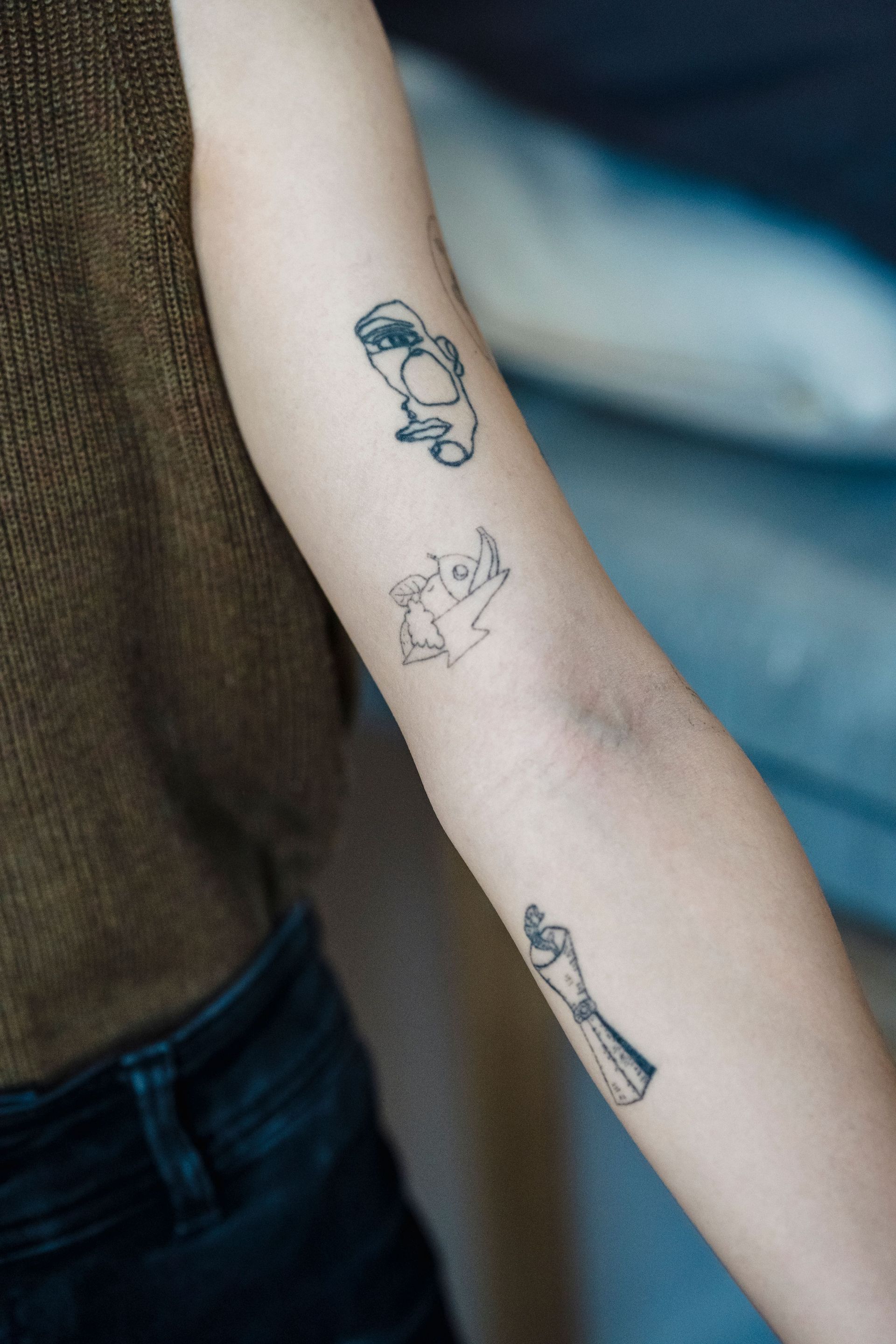
Minimalist tattooing is defined by restraint — doing more with less. It prioritises clean lines, negative space, and intentional simplicity over complexity and detail. Designs in this style tend to use very few elements, very little shading, and often work with the skin itself as part of the composition. The effect when done well is quietly confident: a design that holds your eye precisely because it doesn't try to fill every inch of space.
Minimalism exists in different sub-forms. Some minimalist work is geometric — precise, angular, mathematical forms that create visual interest through proportion. Some is linework — a continuous line drawing, a simple outlined form, a text element in a restrained typeface. Some is symbolic — a single small icon that carries personal meaning. Each approach has its own specific considerations for design and placement.
The Design Challenge: Less Really Is More
Ironically, minimalist design is often harder to execute well than complex work. When there are only two or three elements in a design, every decision matters enormously — a line that's 2mm off, a spacing relationship that isn't quite right, a proportion that doesn't balance perfectly. These errors are immediately visible because there's nowhere for them to hide. Complex, detailed work has more room for imperfection to go unnoticed; minimalist work has essentially none.
This is why the best minimalist tattoo artists bring a genuine design sensibility to the work — they're thinking about proportion, weight, and composition in the same way a graphic designer would. A design that looks deceptively simple is often the result of considerable thought about what to include, what to exclude, and how to make what's left feel intentional.
Scale and Placement
Minimalist tattoos are often small, but small and minimalist aren't the same thing. A small tattoo can be highly detailed; a large tattoo can be minimalist in approach. The question is whether the design's simplicity is serving the piece — not just whether it happens to be compact. That said, many minimalist pieces are small, and scale decisions are critical for this aesthetic. Going too small can mean the design becomes illegible as it heals and the ink settles.
There is a common pitfall with small minimalist tattoos: designs that look crisp and intentional at full size in a photograph look blurry, indistinct, or simply too small once healed on skin. The minimum viable size for a piece to remain readable over time is larger than most clients expect. A good minimalist artist will tell you if your design concept needs to be bigger to remain coherent — listen to that guidance.
Longevity Considerations
Fine lines — which are central to much minimalist tattooing — are more susceptible to fading than bold work. There is simply less ink in the skin, meaning sun exposure and the natural dispersal of ink over time affects the piece more visibly. Minimalist tattoos on high-sun-exposure placements (inner wrist, forearm, collarbone) are particularly vulnerable. Consistent SPF 50 protection is the most important long-term maintenance step. Touch-ups at the 5–10 year mark are normal for fine line minimalist work, particularly on exposed placements.
Some minimalist designs incorporate slightly bolder line weights than strict single-needle work, which improves longevity without compromising the aesthetic. If longevity is a priority, discuss with your artist whether there's a slightly heavier line weight option that preserves the look you want.
Choosing the Right Artist
Not every tattooist who does small tattoos is a minimalist specialist. The key is finding an artist whose portfolio demonstrates the specific aesthetic you want — clean proportions, restraint in design, consistency across many pieces. An artist who does primarily bold traditional work isn't necessarily the right choice for a delicate minimalist piece, even if they're technically excellent. Match the artist to the aesthetic.
When assessing a minimalist artist's portfolio, look specifically at healed work — fresh minimalist tattoos can look sharp before the ink settles. An artist who can show you healed examples of small, fine pieces that have remained clean and readable is demonstrating real skill.
Frequently Asked Questions
Can minimalist tattoos be done in colour?
Yes, though many minimalist designs work in black ink by choice — the simplicity of monochrome suits the aesthetic. Single-colour accent work (a subtle flush of red or green in an otherwise black piece) can be beautiful. Very saturated colour work tends to compete with the restraint that defines the minimalist look, but there are no hard rules.
How small is too small?
As a rough guide, if a design element is less than 1cm in any dimension, it will likely merge or lose clarity once healed. Very fine dots, very thin script, and intricate small symbols are the most common culprits. Your artist will tell you if something needs to be scaled up to remain legible. Trust this advice — it's one of the most common sources of post-healing disappointment when it's ignored.
Are minimalist tattoos cheaper?
Not necessarily. Small doesn't mean fast or cheap — a good minimalist tattoo requires design precision and clean execution that takes real skill. Most studios have a minimum charge that applies regardless of size. An extremely simple minimalist design might fall within the minimum; anything with considered design work will typically be priced beyond it.
What are the most popular minimalist tattoo placements?
Inner wrist, behind the ear, collarbone, ankle, inner forearm, and ribcage are all popular minimalist placements. Each comes with its own considerations: the wrist and forearm get significant sun exposure and are visible in most professional contexts; behind the ear and ankle are lower visibility. Choose placement based on how visible you want it to be and how well that placement will suit the design.
Looking for a minimalist tattoo in Southwest London? Book a consultation at Teddington Ink. See our guide on fine line tattooing for more on the technical considerations that overlap with minimalist work.